
Constitutional Court Decision on Manpower Cluster of Job Creation Law
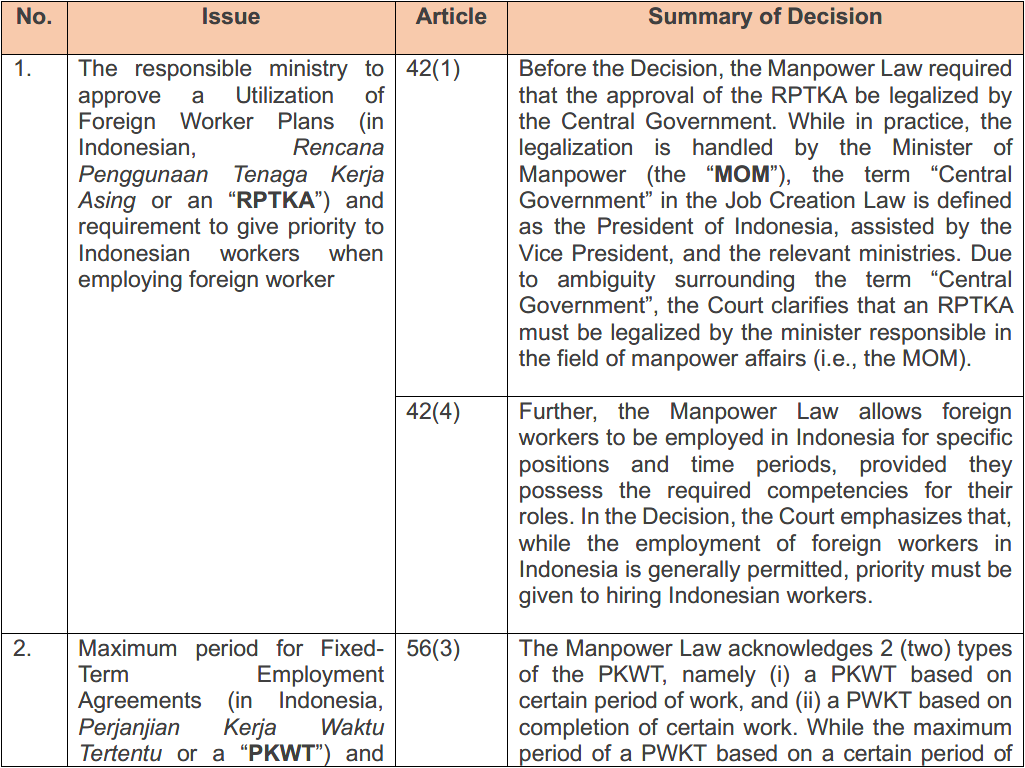
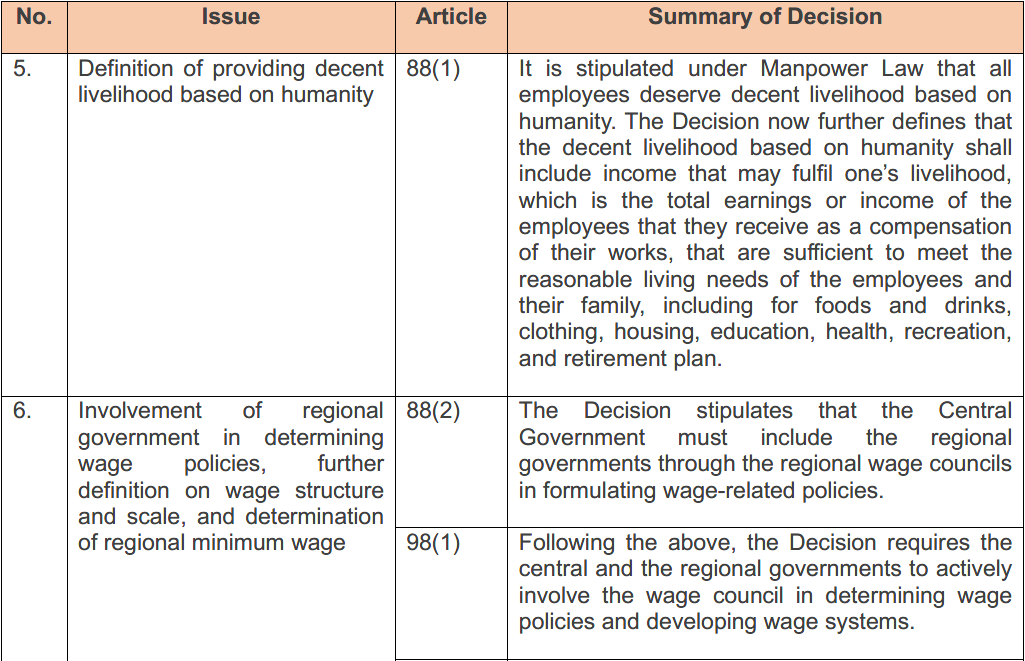
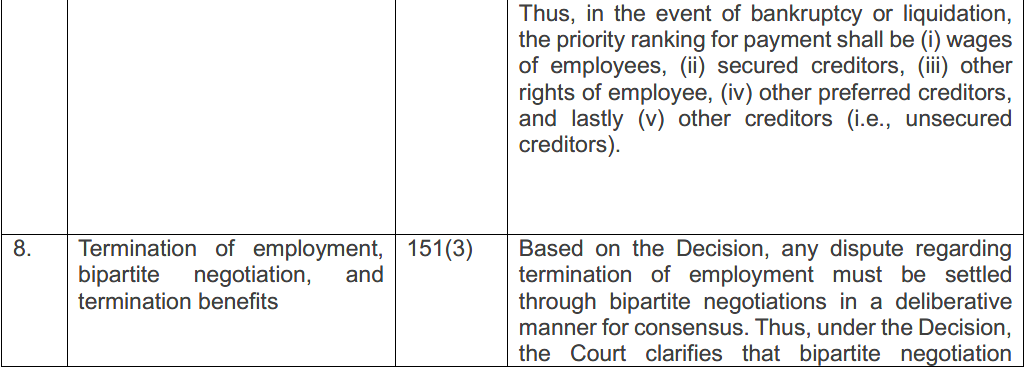
On October 31, 2024, the Constitutional Court (the “Court”) rendered its decision in Case Number 168/PUU-XXI/2023 (the “Decision”) addressing the judicial review of Government Regulation in Lieu of Law No. 2 of 2022 dated December 30, 2022 on Job Creation, which was made into law under Law No. 6 of 2023 dated March 31, 2023 (the “Job Creation Law”).
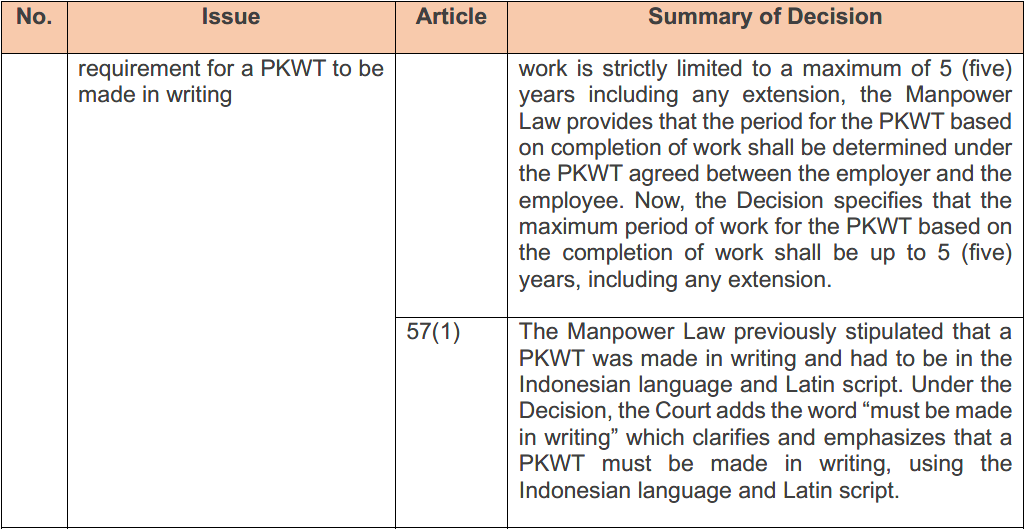
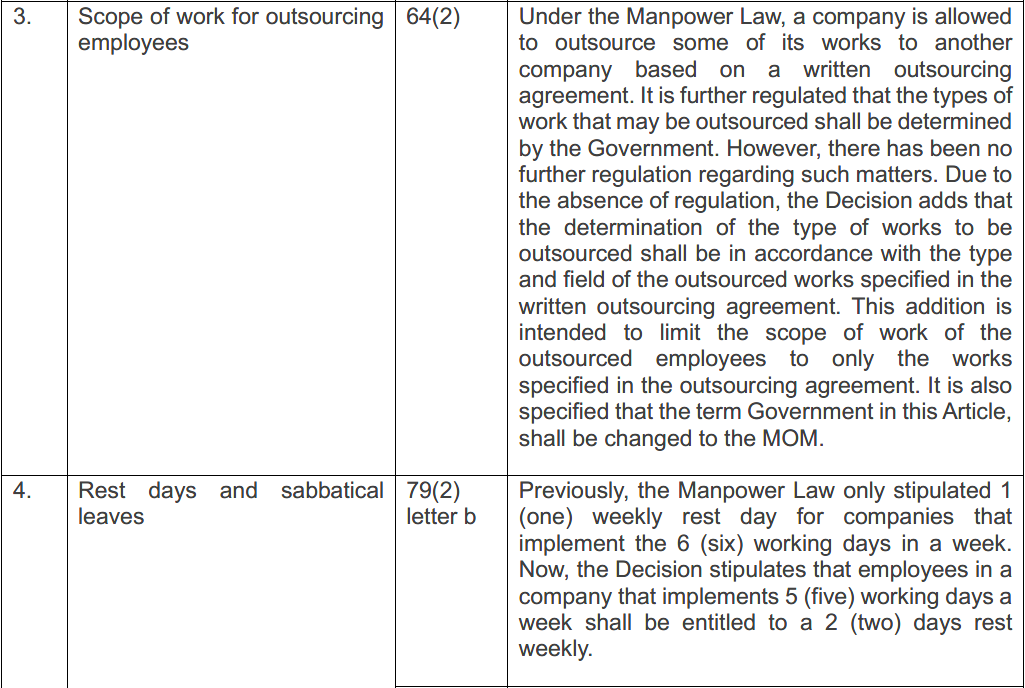
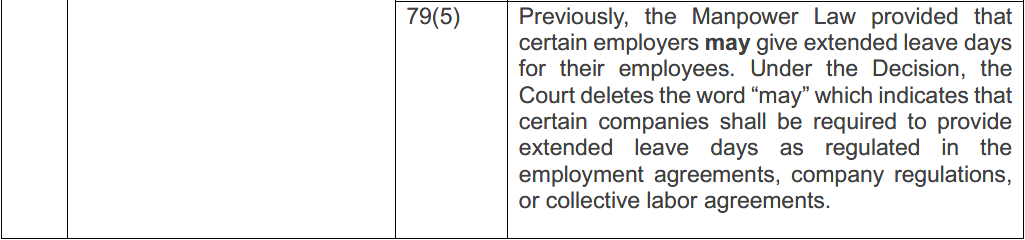
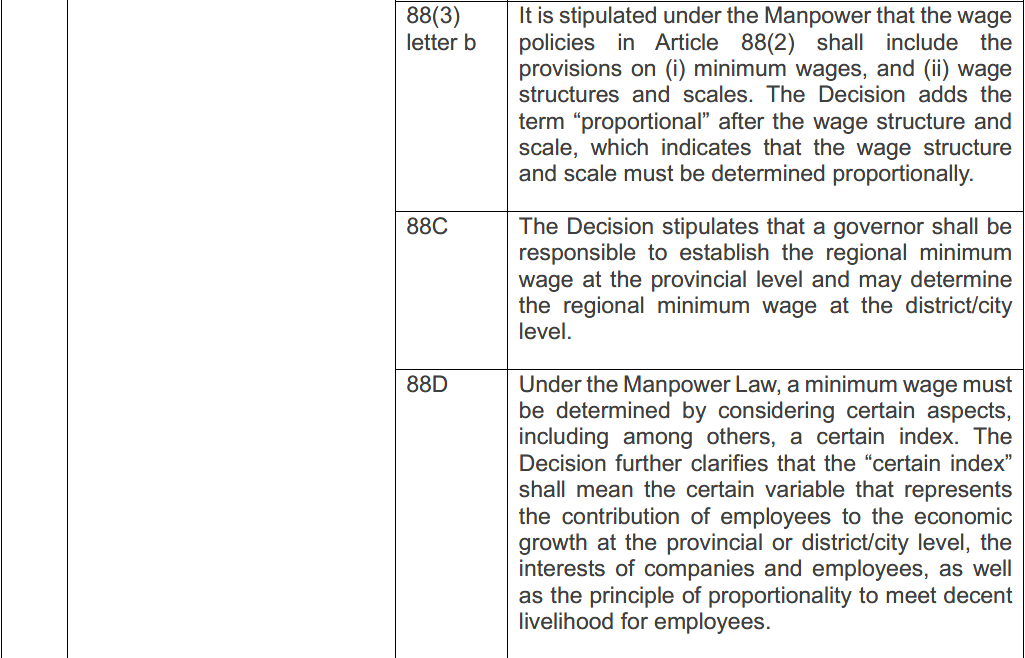
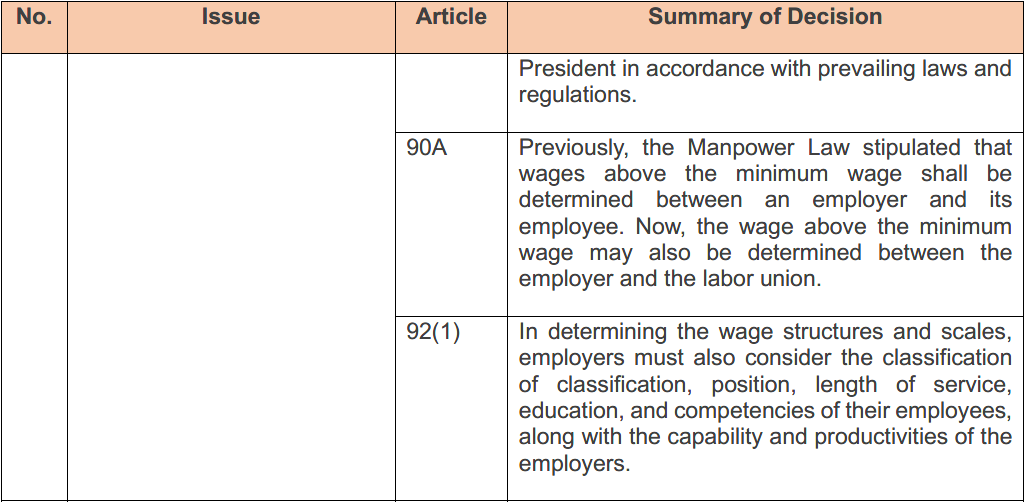
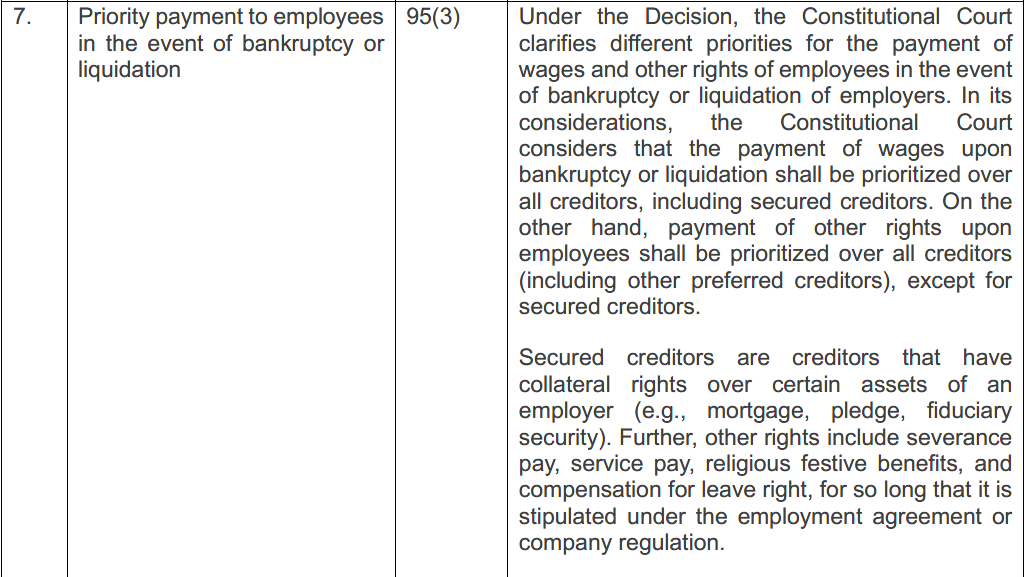
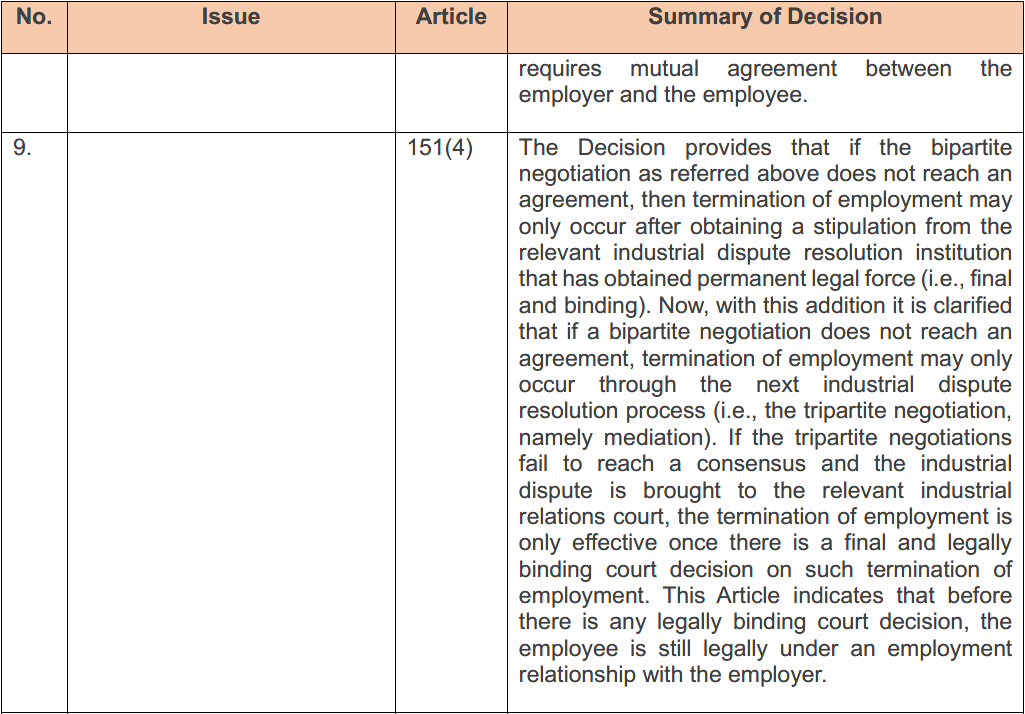
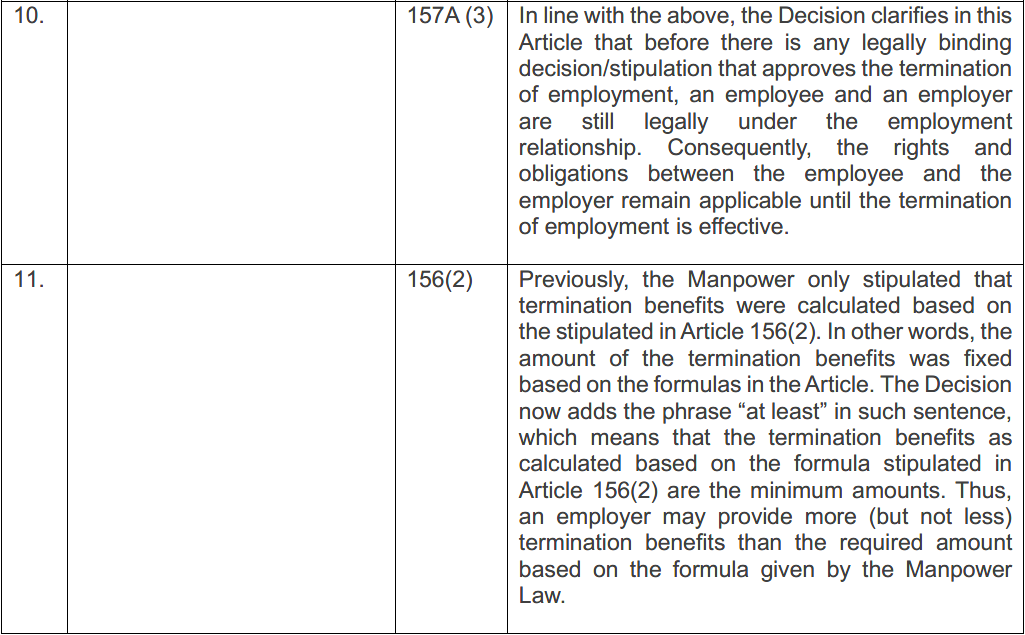
The petitioners of the Decision sought a judicial review on 49 provisions (or norms) established under Law No. 13 of 2003 dated March 25, 2003 on Manpower as lastly amended by the Job Creation Law (the “Manpower Law”). The petitioners contended that these provisions were in direct conflict with the 1945 Constitution of the Republic of Indonesia (as amended, the “Constitution”). After hearing and considering the issues pleaded by the relevant parties in the proceedings, the Court issued 21 legal rulings that amend and rectify certain provisions of the Manpower Law.
We set out below a summary of the Decision and its impact on the Manpower Law.

♦ Enactment of New Manpower Law
In addition to the changes outlined in the summary above, the Court views that there may be overlapping provisions under the Manpower Law and the Job Creation Law that may create confusions and difficulties for public in understanding the Manpower Law, which in turn may lead to prolonger legal uncertainty and injustice. Thus, the Court mandates the lawmakers (i.e., the Parliament) to create a new manpower law which covers the provisions under the existing Manpower Law and the Job Creation Law as well as any other lower regulations that stipulate the same matters. With the enactment of the new manpower law, the Court believes that any problems of conflict and inconsistency of substance in the Manpower Law can be detected, reorganized, and corrected immediately.
The Constitutional Court requires the lawmakers to create the new manpower law in 2 (two) years.
It is clear that the Decision significantly affects employers in general in a number of ways. For instance, now an employer may not legally initiate termination of employment simply by delivering a notice of termination to an employee. Please reach out to our manpower/labor law specialists to discuss further how the Decision affects employers and how we may assist you in complying with the Decision moving forward.
AKSET
Please contact Johannes C. Sahetapy-Engel (jsahetapyengel@aksetlaw.com), Thomas P. Wijaya (twijaya@aksetlaw.com), Rizky Rakhmadita (rrakhmadita@aksetlaw.com), or Arthur Basa Okuli Nainggolan (anainggolan@aksetlaw.com) for further information.
Disclaimer:
The foregoing material is the property of AKSET and may not be used by any other party without prior written consent. The information herein is of general nature and should not be treated as legal advice, nor shall it be relied upon by any party for any circumstance. Specific legal advice should be sought by interested parties to address their particular circumstances.
Any links contained in this document are for informational purposes and are available and relevant at time this publication is made. We provide no liability whatsoever in respect of any information or content in such links.
