
Key Changes to the Regulation on Actuaries
On December 30, 2020, the Minister of Finance issued Regulation No. 227/PMK.01/2020 of 2020 on Actuaries (“MOF Reg. 227”). MOF Reg. 227 revoked the previous regulation on actuaries, namely the Ministry of Finance Regulation No. 137/PMK.01/2016 of 2016 dated September 20, 2016 (“MOF Reg. 137”).
We set out below a summary on the key changes between the provisions under MOF Reg. 137 and MOF Reg. 227.
- Types of Actuaries
Under the previous regime, MOF Reg. 137 only provided definitions of Registered Actuary, Registered Actuary Adjunct and Public Actuary. While now MOF Reg. 227 expands the definitions of actuaries as well as those who are qualified to provide actuarial services as follows:
-
- Actuary: an individual who has obtained a certification from FSAI (Fellow of the Society of Actuaries of Indonesia) or other equivalent and recognized certification;
- Actuary Adjunct: an individual who has obtained a certification from ASAI (Associate of the Society of Actuaries of Indonesia) or other equivalent and recognized certification;
- Registered Actuary: Actuary who is registered to provide actuarial services in accordance with MOF Reg. 227;
- Registered Actuary Adjunct: Actuary Adjunct who is registered to provide actuarial services in accordance with MOF Reg. 227;
- Public Actuary: individuals who have obtained a license from the Ministry of Finance to provide actuarial services to the public.
Please note that a Registered Actuary Adjunct and Registered Actuary may assist a Public Actuary in providing actuarial services to companies and/or an Actuarial Consulting Office (“ACO”). However, please note that a Registered Actuary Adjunct and a Registered Actuary are prohibited from signing-off an Actuarial Services Report (as we elaborate below). Notwithstanding the above definitions of actuaries, we note that the general concept on who will be qualified to provide actuarial services is still similar.
- Definition of Actuaries Report
MOF Reg. 227 now provides more detailed definition of an “Actuarial Service Report” as follows:
“written documents consisting of an analysis, opinion, and/or recommendation on actuarial services that is signed by a public actuary, including other documents deemed as actuaries report in accordance with the applicable laws and regulations.”
Previously, MOF Reg. 137 only defined “Actuaries Report” as follows:
“written document consisting of an analysis and recommendation on actuarial services that is signed by public actuary.”
- Scope of Actuarial Services
MOF Reg. 227 now stipulates a broader scope of actuarial services compared to the existing scope of actuarial services that were regulated under MOF Reg. 137. Please refer to the below.
-
- Actuarial statement in relation to insurance products, including premium rates and profitability of products. Previously, MOF Reg.137 did not include premium rates and profitability of products as part of the scope;
- Determination of financial soundness and capital adequacy for insurance companies and other financial industries, such as pension fund;
- Liability determination on reserve fund of insurance companies, pension fund, social security, and other company that requires actuarial calculation technique. We note that this scope was also stipulated under MOF Reg. 137;
- Estimation of margin of risks and planning of possible benefit payments in the future for the insurance sector and other financial industries, such as pension fund;
- Valuation of actuarial aspects and providing consultation or advice that requires actuarial calculation technique; and
- Other actuarial services or other services that are required to be signed off by a public actuary in accordance with the applicable laws and regulations. We note that MOF Reg. 137 also stipulated a similar scope.
- Whether or Not Companies Can Provide Actuarial Services
Under the MOF Reg. 227, it is now stipulated that every company that has a unit that provides actuarial services is required to hire, at the minimum, a registered actuary adjunct or a registered actuary. Please note that MOF Reg. 137 was silent on this requirement.
- Whether or Not Public Actuary Can be Hired by a Company
In relation to the actuary services provided by a public actuary, MOF Reg. 227 stipulates that a public actuary in providing actuarial services is required to provide such services through:
-
- Insurance company or other company, in accordance with the applicable laws and regulations, as an actuary of the company; and/or
- ACO as an actuarial consultant.
Furthermore, a public actuary may hold multiple positions, namely as an actuary consultant and an actuary of a company, as long as there is no conflict of interests.
Please note that MOF Reg. 137 was silent on the above provisions.
- Contents of an Actuaries Report
Similar to the existing provisions Under MOF Reg. 137, MOF Reg. 227 now reiterates that an actuaries report must:
-
- be made in Bahasa Indonesia;
- be made based on the agreement or task given by the task assignor;
- be signed off by a public actuary who has signed such agreement or received such task by the task assignor, and list their license number;
- list the report number;
- list the names and register numbers of registered actuary adjunct and/or registered actuary, if they are involved in the preparation of the actuarial service report.
In addition to that, a public actuary must prepare and maintain a working documentation (kertas kerja) with respect to the relevant actuaries report that will be published.
- Transitional Provisions
We set out below the transitional provisions of MOF Reg. 227 regarding license of ACO, certificates of registered actuary adjunct and registered actuary, license of public actuary, and prohibition of providing actuarial services.
-
- License of ACO that was issued in accordance with the previous regulation, namely Ministry of Finance Decree No. 425/KMK.06/2003 on Licensing and Administration of Supporting Business Activities of Insurance will still be valid until September 20, 2021. Subsequently, such license will be declared invalid and such ACO must apply for a license based on the provisions under MOF Reg. 227.
- Certificates of registered actuary adjunct and registered actuary, license of public actuary, and license of ACO that was made in accordance with MOF. Reg 137 is still valid. On the other hand, applications for such certificates and licenses that were already submitted, but has not been given a license or approval, must be resubmitted based on the provisions under MOF Reg. 227
- With the enactment of MOF Reg. 227, all parties are prohibited from providing actuarial service (please see section on “Scope of Actuarial Service” in point 3 above) if such party does not fulfill the requirements under MOF Reg. 227. We note that MOF Reg. 137 also stipulated a similar provision.
***
April 8, 2021
Please contact for Abadi Abi Tisnadisastra (atisnadisastra@aksetlaw.com), Adhitya Ramadhan (aramadhan@aksetlaw.com), or Satria Kasmaliputra (mkasmaliputra@aksetlaw.com) for further information.
Disclaimer:
The foregoing material is the property of AKSET and may not be used by any other party without prior written consent. The information herein is of general nature and should not be treated as legal advice, nor shall it be relied upon by any party for any circumstance. Specific legal advice should be sought by interested parties to address their particular circumstances.
Any links contained in this document are for informational purposes and are available and relevant at time this publication is made. We provide no liability whatsoever in respect of any information or content in such links.

Key Changes to the Regulation on Actuaries

New Immigration Policies During New Normal Adaptation Period
On March 26, 2021, the Director General of Immigration (the “DGIM”) issued Circular Letter No. IMI-0661.GR.01.01 regarding Visa and Stay Permit Provisions During the New Normal Adaptation Period (“CL 0661”). CL 0661 replaces and revokes the DGIM Circular Letter No. IMI-1555.GR.01.01 dated October 15, 2020 regarding Visa and Stay Permit Provisions During the New Normal Adaptation Period (“CL 1555”) and the DGIM Circular Letter No. IMI-GR/01.01-0331 dated February 11, 2021 on the Reinforcement of CL 1555. CL 0661 enters into force as of March 26, 2021.
CL 06661is issued as a guideline to optimize the function of the immigration office in carrying out the visa and stay permit services during this “new normal” period. The key provisions of the circular are as follows.
- Visa Application Provisions
- No Requirement to Submit Health Certificates
While the entry restrictions as established in Minister of Law and Human Rights Regulation No. 26 dated October 1, 2020 Regarding Visas and Stay Permits During the New Normal (the “MOLHR Regulation”) are still in place (i.e., temporary suspension of the issuance of visa-free entries and visas on arrival), foreigners that wish to enter Indonesia may apply for a Visitor Visa or a Limited Stay Visa. Such visa applications were already accommodated in CL 1555. However, previously it was required for the applicants to submit health certificates that stated they had tested negative for COVID-19. This requirement no longer applies under CL 0661. However, please note that eVisa ending with “DN” cannot be used for travel into Indonesia.
-
- Single-Entry Visitor Visa for Humanitarian Reasons
For foreigners that intend to visit/accompany their family members who are sick in Indonesia, or for other medical purposes, a Single-Entry Visitor Visa may be issued, provided they fulfill the application requirements stipulated in the MOLHR Regulation ( declaration of willingness to enter into quarantine at own expenses at government-appointed facilities if visitors show COVID-19 symptoms/are declared positive upon entry in Indonesia; declaration of willingness to be under supervision while under quarantine; proof of health/travel insurance that covers medical expenses or declaration of willingness to pay for COVID-19 treatment at own expense).
-
- Waiver of Requirement to Provide Proof of Accounts Having At Least US$10,000
The MOLHR Regulation also requires applicants of a Single-Entry Visitor Visa to show proof that they have at least US$10,000 to sustain the cost of living while in Indonesia. Under CL 0661, this requirement is waived for applicants who are aid workers, medical and food aid, transportation crew and visitors who apply for humanitarian reasons.
- Stay Permit Provisions
- Extension/Renewal of Various Stay Permits for Foreigners
Foreigners within Indonesia who hold a Visiting Stay Permit granted through their Visas on Arrival, Single-Entry Visitor Visas, Multiple-Entry Visitor Visas, or APEC Business Travel Cards may request an extension for their Stay Permit through the immigration office. For foreigners holding Visiting Stay Permits, Limited Stay Permits, or Fixed Stay Permits that cannot be extended, they may request a new Stay Permit after obtaining a Visa Approval. If foreigners holding a Limited Stay Permit or a Fixed Stay Permit wish to apply for a visa, they must first return immigration documents to the immigration office.
- Stay Permit Application
To apply for a new Stay Permit, applicants must first apply for a Visa before their current Stay Permit ends. Applicants who overstayed their permits by less than 60 days, may still apply for a visa, provided that they settle their fines first. However, if the applicant’s overstay exceeds 60 days, if an applicant is deported or has his/her stay permit extension application denied, he/she must leave Indonesia immediately.
The issuance of this Circular Letter is expected to provide ease and clarity of immigration services during this new normal period. We expect that these travel policies will be further relaxed in the future as the COVID-19 situation improves.
***
April 5, 2021
Please contact Johannes C. Sahetapy-Engel (jsahetapyengel@aksetlaw.com) or Caleb Sitorus (csitorus@aksetlaw.com) for further information.
Disclaimer:
The foregoing material is the property of AKSET and may not be used by any other party without prior written consent. The information herein is of general nature and should not be treated as legal advice, nor shall it be relied upon by any party for any circumstance. Specific legal advice should be sought by interested parties to address their particular circumstances.
Any links contained in this document are for informational purposes and are available and relevant at time this publication is made. We provide no liability whatsoever in respect of any information or content in such links.
New Immigration Policies During New Normal Adaptation Period
Updated Protocols and Guidance for Domestic Travelers
On March 26, 2021, the Indonesian Covid-19 Task Force issued the Circular Letter No. 12 of 2021 on Provisions for Domestic Travels during the Covid-19 Pandemic (the “Circular Letter”). The Circular Letter is issued in relation with the Government’s intention to limit and discontinue the spread of Covid-19 that continues to potentially increase due to human mobilities and travels. In addition, the Government intends to expand the use of the locally produced, breath-based, Covid-19 early detection tool, namely the “GeNose C19,” as an alternative health screening tool across all modes of transportations for domestic travelers.
The Circular Letter will be effective from April 1, 2021 until a later specified time in accordance with the needs and/or recent developments.
We set out below the key points under the Circular Letter that domestic travelers will be subject to and need to take into account.
- Health Protocols for Domestic Travelers
All travelers are required to implement the health and safety protocols, i.e., wearing masks, keeping distance from each other (physical distancing), and washing hands frequently with soap or hand sanitizers. The Circular Letter also specifies that the masks shall be three-layered cloth masks or medical masks. Travelers shall wear the masks correctly, by covering the nose and mouth.
Talking or engaging in phone conversation is not allowed during the travels in all means of public transportation. Eating or drinking during a flight that lasts less than 2 (two) hours is not allowed either, except for individuals who need to consume medications for treatments that otherwise could endanger the safety and health of such individuals.
- Covid-19 Testing Before Domestic Travels
In general, domestic travelers shall have a negative Covid-19 test result prior to traveling. The provisions are as follows:
- If traveling by air transportation, sea transportation, or intercity train, travelers shall:
- Show the negative Covid-19 test result using an RT-PCR test and the sample is taken not later than 3x24 hours before departure; or
- Show the negative Covid-19 test result using an antigen rapid test and the sample is taken not later than 2x24 hours before departure; or
- Show the negative Covid-19 test result using the GeNose C19 at the airport, seaport, or train station before departure; and
- Travelers by air transportation and sea transportation shall also fill in the Indonesian electronic Health Alert Card (the “e-HAC Indonesia”).
- If traveling by public land transportation, travelers shall be subject to random testing using rapid test antigen or the GeNose C19, if deemed necessary by the Regional Covid-19 Task Force.
- If traveling by private land transportation, travelers are encouraged to take Covid-19 test using an RT-PCR or rapid test antigen and the sample is taken not later than 3x24 hours before departure, or using the GeNose C-19 at the rest area. Travelers will be subject to random testing, if deemed necessary by the Regional Covid-19 Task Force.
Travelers for routine travels within the Java Island using sea transportation with the purpose to serve the cruise of a limited location between islands, or between domestic ports within one area, or by land transportation, both private and public, within one area are not obliged to show a negative Covid-19 test result using the RT-PCR, antigen rapid test, or GeNose C-19, but will be subject to random testing, if deemed necessary by the Regional Covid-19 Task Force.
Specifically for domestic travel to Bali using all modes of transportation, whether private and public, travelers shall:
- show the negative Covid-19 test result using the RT-PCR and the sample is taken not later than 2x24 hours before the departure; or
- show the negative Covid-19 test result using the antigen rapid test and the sample is taken no later than 2x24 hours before the departure; or
- show the negative Covid-19 test result using the GeNose C-19 at the airport, seaport, or terminal; and
- complete the e-HAC Indonesia.
***
March 31, 2021
Please contact Johannes C. Sahetapy-Engel (jsahetapyengel@aksetlaw.com) or Satria Kasmaliputra (mkasmaliputra@aksetlaw.com) for further information.
Disclaimer:
The foregoing material is the property of AKSET and may not be used by any other party without prior written consent. The information herein is of general nature and should not be treated as legal advice, nor shall it be relied upon by any party for any circumstance. Specific legal advice should be sought by interested parties to address their particular circumstances.
Any links contained in this document are for informational purposes and are available and relevant at time this publication is made. We provide no liability whatsoever in respect of any information or content in such links.
Updated Protocols and Guidance for Domestic Travelers
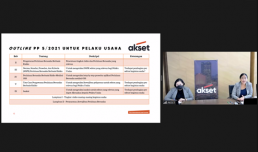
HukumOnline Webinar: Memahami Penerapan Perizinan Berusaha Berbasis Risiko Berdasarkan Peraturan Pelaksana UU Cipta Kerja
On March 25, 2021, AKSET Partners Inka Kirana and Alfa Dewi Setiawati were the speakers for "HukumOnline Webinar: Memahami Penerapan Perizinan Berusaha Berbasis Risiko Berdasarkan Peraturan Pelaksana UU Cipta Kerja" Bapak Riyatno from BKPM was the other speaker for this webinar.
New Regulation on Employment of Foreign Workers
Following the issuance of Law No. 11 of 2020 dated November 2, 2020 on Job Creation (the “Job Creation Law”), the Government issued Government Regulation No. 34 of 2021 dated February 2, 2021 on the Employment of Foreign Workers (“GR 34”) to further regulate obligations and requirements of employing foreign workers in Indonesia.
GR 34 introduces new provisions as well as amends certain stipulations under the Presidential Regulation No. 20 of 2018 dated March 26, 2018 on Employment of Foreign Workers (the “Previous Regulation”). The Previous Regulation is revoked by GR 34.
The major changes under GR 34 compared to the Previous Regulation are as follows:
- Employers’ Criteria
Under GR 34, employers of foreign workers shall be the following:
- Government agencies, countries’ representatives, international agencies, and international organizations;
- Trade representative offices, foreign company representative offices, and foreign news agencies that carry out activities in Indonesia;
- Private foreign companies doing business in Indonesia;
- Legal entities established under the laws of Indonesia in the form of a limited liability company or a foundation or a foreign legal entity registered in the relevant agency;
- Social, religious, or cultural agencies;
- Promotors; and
- Other business entities so long it is not prohibited under Indonesian laws.
GR 34 further states that legal entities as mentioned in the letter (d) above would exclude limited liability companies in the form of individual limited liability companies. Please see our Newsflash on individual limited liability companies under the Job Creation Law [here].
- Employers’ Obligation
In addition to appointing an Indonesian employee as a counterpart (in Indonesian, Tenaga Kerja Pendamping) and conducting training sessions for such counterpart, GR 34 requires an employer to return the foreign workers to his/her home country when his/her employment agreement expires.
A counterpart and the training sessions for such counterpart would not be necessary for the following positions:
- Directors and commissioners;
- Head of a representative office;
- Members of a Board of Trustees, a Board of Management, or a Board of Supervisors of a foundation; and
- Foreign workers employed for temporary works.
Prohibitions
Consistent with the Previous Regulation, GR 34 prohibits an individual employer from hiring foreign workers. Further, foreign workers are not permitted to have a position that handles human resources matter.
GR 34 restricts an employer from hiring a foreign worker for multiple positions at the same company.
Manpower Utilization Plans
As stipulated in the Previous Regulation, employers who will hire foreign workers must apply submit a Manpower Utilization Plan (in Indonesian, Rencana Penggunaan Tenaga Kerja Asing or an “RPTKA”) for approval. In the process of submission, the employer is required to attach documents relating to the proposed foreign workers. According to GR 34, the documents are as follows:
- education diplomas;
- competency or work experience certifications;
- an employment agreement or any other agreement;
- a letter of counterpart appointment;
- a statement letter as guarantor for the foreign worker; and
- checking/savings account of the foreign worker or the employer.
Letters (c) and (f) above were not mentioned under the Previous Regulation.
RPTKAs for government agencies, countries’ representatives, international agencies, and international organizations
The Previous Regulation does not require government agencies, countries’ representatives, international agencies, and international organizations to submit an RPTKA for approval. However, GR 34 now requires the foregoing agencies and organizations to submit an RPTKA for approval. But GR 34 exempts such agencies organizations from the obligation to have a feasibility study after the RPTKA submission.
The submission must be submitted by attaching:
- an application letter and reasons to employ foreign workers;
- a draft employment agreement or any other agreement; and/or
- an approval letter from the relevant agency.
Types of RPTKA Approvals
GR 34 presents different types of RPTKA approvals, as follows:
- an RPTKA for temporary jobs
- This type of RPTKA legalization is valid for 6 (six) months and may not be extended.
- an RPTKA for jobs more than 6 (six) months
- This type of RPTKA legalization is valid for 2 (two) years and may be extended.
- an RPTKA for positions without the obligation to pay compensation funds on the employment of foreign workers (in Indonesian, Dana Kompensasi Penggunaan Tenaga Kerja Asing or “DKPTKA”)
- This type of RPTKA approval is valid for 2 (two) years and may be extended.
- This type of RPTKA approval is granted for government agencies, countries’ representatives, international agencies, and international organizations.
- an RPTKA for a Special Economy Area (in Indonesian, Kawasan Ekonomi Khusus)
- This type of RPTKA approval is valid for 5 (five) years and may be extended.
- For directors or commissioners, this type of RPTKA approval may only be given once and will be valid as long as the foreign workers serve as the directors or commissioners.
The abovementioned types of RPTKA approvals are not mandatory for:
- Directors or commissioners who have certain share ownership in the company (i.e., the employer);
- Diplomatic or consular officers at foreign countries’ representative offices; or
- Foreign workers employed by employers for production activities that were stopped due to emergencies, vocational, technology-based start-ups, business visits, and research for a certain period.
RPTKA Approvals Extensions
An extension of an RPTKA approval shall be submitted online at least 30 (thirty) days before it expires. As mentioned above, an extension of an RPTKA legalization may be granted for no more than 2 (two) years. Whereas for an RPTKA for Special Economy Area, the extension may be granted for a maximum of 5 (five) years.
DKPTKA
DKPTKA is not required for:
- government agencies;
- countries’ representatives;
- international organizations;
- social agencies;
- religious agencies; and
- certain positions at education institutions.
- Stay Permits
Every foreign worker who works in Indonesia must have a stay permit.
- Social Security
Pursuant to the Previous Regulation, employers were only required to provide the Employment Social Security for foreign workers who would work for more than 6 (six) months in Indonesia. However, GR 34 mandates that the employer is also obliged to register its foreign workers who work less than 6 (six) months in Indonesia for at least the work accident insurance program.
- Reporting
Pursuant to GR 34, employers who employ foreign workers shall submit an annual report to the Minister of Manpower regarding the implementation of foreign workers’ employment, education and job training for counterparts, and technology and knowledge transfer from the foreign workers to the counterparts.
- Sanction
Unlike the Previous Regulation, GR 34 details a list of administrative sanctions for violations of some provisions in GR 34. The administrative sanctions are as follows:
- fines;
- temporary suspension of the RPTKA approval process; and/or
- revocation of the RPTKA approval.
- Effective Date
GR 34 will be effective as of April 1, 2021. Any relevant licenses for foreign workers’ employment issued prior to the effective date will be valid until such licenses expire. As for submissions that are recently submitted will be processed in accordance with provisions under GR 34.
***
March 15, 2021
Please contact Johannes C. Sahetapy-Engel (jsahetapyengel@aksetlaw.com) or Thomas P. Wijaya (twijaya@aksetlaw.com) for further information.
Disclaimer:
The foregoing material is the property of AKSET and may not be used by any other party without prior written consent. The information herein is of general nature and should not be treated as legal advice, nor shall it be relied upon by any party for any circumstance. Specific legal advice should be sought by interested parties to address their particular circumstances.
Any links contained in this document are for informational purposes and are available and relevant at time this publication is made. We provide no liability whatsoever in respect of any information or content in such links.
New Regulation on Employment of Foreign Workers
Omnibus Law’s Implementing Regulation on Unemployment Benefits
On February 2, 2021, the Indonesian Government issued Government Regulation No. 37 of 2021 on the Implementation of the Unemployment Benefits Program (in Indonesian, Jaminan Kehilangan Pekerjaan or “JKP”) (such Regulation, “GR 37”). Previously, Law No. 11 of 2020 dated November 2, 2020 on Job Creation (the “Job Creation Law”) amended Article 18 of Law No. 40 of 2004 dated October 19, 2004 on the National Social Security System by including JKP as one of the social security programs in Indonesia. Before the Job Creation Law, JKP was not a social security program.
GR 37 defines JKP as social security provided to workers whose employment is terminated in the form of cash benefits, access to job market information, and job training.
Employers are required to register their workers with the JKP program. The workers shall be: i) Indonesian citizens, ii) below 54 (fifty four) years old when registered, and iii) in employment relationship with the respective employers. In addition, workers who work at large or middle size enterprises must be registered with the following programs: National Health Security (in Indonesian, Jaminan Kesehatan Nasional), Work Accident Security (in Indonesian, Jaminan Keselamatan Kerja or “JKK”), Provident Fund (in Indonesian, Jaminan Hari Tua), National Pension Security (in Indonesian, Jaminan Pensiun) and Life Insurance (in Indonesian, Jaminan Kematian or “JKM”). Workers who work at micro and small enterprises must be registered with the foregoing programs as well, except for the National Pension Security (in Indonesian, Jaminan Pensiun).
- Application Procedures
For workers who were registered with the social security programs before GR 37 is issued, such workers would be automatically enrolled as JKP program participants. The employers as well as the workers would receive certificates confirming that they are participants in the JKP program.
For workers who are employed after GR 37 is issued, the employers must register such workers by completing the application forms at least 30 (thirty) days after the workers start working for the employers. The Employment Social Security Agency (in Indonesian, Badan Penyelenggara Jaminan Sosial Ketenagakerjaan or “BPJS Ketenagakerjaan”) will provide participant number(s) at least 1 (one) day after the form is received and the first premium is paid to BPJS Ketenagakerjaan. If this process is completed, the employers and the workers will receive certificates confirming that they are participants in the JKP program.
- Premium and Payment Procedure
The premium for the JKP program shall be paid every month in the amount of 0.46% (zero point four six percent) of a worker’s monthly salary. The 0.46% (zero point four six percent) amount is based on the following calculation:
- 22% (zero point two two percent) from the worker’s monthly salary will be paid by the Central Government; and
- The remaining 0.24% (zero point two four percent) from the worker’s monthly salary will be paid through the re-composition of the JKK and JKM premia. Pursuant to GR 37, the amount of the JKK premium would be 0.14% (zero point one four percent) from the worker’s monthly salary and the JKM premium would be 0.10 (zero point one zero percent) from the worker’s monthly salary.
The amount of the monthly salary used as the basis for the premium calculation shall not exceed Rp5,000,000 (five million Rupiah). In case the amount is greater than that, then the salary used as the basis for the premium calculation is Rp5,000,000 (five million Rupiah). The monthly salary shall cover the basic salary as well as fixed cash allowances.
- JKP Benefits
As mentioned in the definition of JKP itself, JKP benefits are in the form of cash benefits, access to job market information, and job training.
JKP benefits will be provided upon employment termination, whether the workers work under a fixed-term employment agreement or a permanent employment agreement, provided that such workers are willing to work again in the future.
JKP benefits may be requested only if the participant has paid at least 12 (twelve) months of premium within a 24 (twenty four) month period and has paid the premium for at least 6 (six) consecutive months before the employment relationship is terminated. In addition, the JKP benefits may be requested 3 (three) times during the participants’ working-age period so long that it fulfils the requirements below:
- The first JKP benefits are requested if the participant has paid at least 12 (twelve) months of premium within 24 (twenty four) months and has paid the premium for at least 6 (six) consecutive months before the employment relationship is terminated;
- The second JKP benefits are requested if the participant has paid its premium 5 (five) years after receiving his/her first JKP benefits; and
- The third JKP benefits are requested if the participant has paid its premium 5 (five) years after receiving his/her second JKP benefits.
JKP benefits may not be requested if the employment relationship is terminated because of the following reasons:
- The worker resigns;
- The worker suffers from permanent disability;
- The worker retires; or
- The worker passes away.
Cash benefits
The cash benefits of JKP will be provided no more than 6 (six) months’ salary and paid monthly with conditions as follows:
- 45% (forty five percent) from the monthly salary will be provided for the first 3 (three) months; and
- 25% (twenty five percent) from the monthly salary will be provided in the following 3 (three) months.
Note that the maximum amount of the monthly salary used in this case is currently set at Rp5,000,000. If the actual amount of the monthly salary of a worker exceeds Rp5,000,000, then the amount used will be Rp5,000,000.
Access to job market information
Access to job market information may be in the form of providing:
- data of job vacancies; and/or
- job guidance through self-assessment and/or career counseling.
Job training
Job training benefits would be given based on competence and will be carried out online and/or offline. Public or private job training agencies will carry out this job training. These agencies may work together with professional certificate provider agencies to implement competency certification through competency examination.
Further provisions on procedures to provide JKP benefits will be regulated under a Minister Regulation.
- JKP Benefits’ Claim Limitation and Sanctions
Participants cannot claim JKP benefits if:
- participants do not request JKP benefits claim 3 (three) months after his/her employment relationship is terminated;
- participants have new occupation; or
- participants pass away.
For employers who fail to register its workers to be participants of the JKP program may subject to administrative sanctions, i.e., written warnings and prohibition from certain public services.
***
March 15, 2021
Please contact Johannes C. Sahetapy-Engel (jsahetapyengel@aksetlaw.com) or Thomas P. Wijaya (twijaya@aksetlaw.com) for further information.
Disclaimer:
The foregoing material is the property of AKSET and may not be used by any other party without prior written consent. The information herein is of general nature and should not be treated as legal advice, nor shall it be relied upon by any party for any circumstance. Specific legal advice should be sought by interested parties to address their particular circumstances.
Any links contained in this document are for informational purposes and are available and relevant at time this publication is made. We provide no liability whatsoever in respect of any information or content in such links.
Omnibus Law’s Implementing Regulation on Unemployment Benefits
Micro PPKM is Extended for Two Weeks
Following the issuance of the Governor of DKI Jakarta Decree No. 107 of 2021 dated February 8, 2021 (“Decree 107/2021”) on the Entry into Force of Micro-Scale Public Activities (Pemberlakuan Pembatasan Kegiatan Masyarakat Berbasis Mikro or the “Micro PPKM”), the Governor of DKI Jakarta issued Decree No. 213 of 2021 dated March 8, 2021 (“Decree 213/2021”) on the Extension of the Entry into Force of Micro-Scale Public Activities.
Decree 213/2021 provides that the Micro PPKM is extended for two weeks, effective from March 9, 2021 until March 22, 2021.
Decree 213/2021 contains similar provisions to Decree 107/2021, with the only notable change being that the activities in public areas and other places may operate at 50% (fifty percent) of the full capacity. However, activities in these places that may attract masses will be stopped.
While the foregoing decree is only applicable in Jakarta, other regions will also apply similar Micro PPKM policies. On March 4, 2021, the Minister of Home Affairs issued his Instruction No. 5 of 2021 on the Extension of the Entry into Force of the Micro PPKM and the Establishment of Posts for Covid-19 Management in Villages and Urban Villages to Manage the Spread of Covid-19 (the “Instruction”). The Instruction orders Governors and Mayors/Regents of specific cities/regencies in Java, Bali, East Kalimantan, South Sulawesi, and North Sumatera to also apply similar Micro PPKM policies. To determine which areas shall apply the Micro PPKM policies, the following factors set forth in the Instruction must be considered: above average death rate, below average recovery rate, above average active case rate, and Bed Occupancy Ratio for the Intensive Care Unit and Isolation Unit of above 70%.
***
March 10, 2021
Please contact Johannes C. Sahetapy-Engel (jsahetapyengel@aksetlaw.com) or Caleb Sitorus (csitorus@aksetlaw.com) for further information.
Disclaimer:
The foregoing material is the property of AKSET and may not be used by any other party without prior written consent. The information herein is of general nature and should not be treated as legal advice, nor shall it be relied upon by any party for any circumstance. Specific legal advice should be sought by interested parties to address their particular circumstances.
Any links contained in this document are for informational purposes and are available and relevant at time this publication is made. We provide no liability whatsoever in respect of any information or content in such links.
Micro PPKM is Extended for Two Weeks
Definite Term Employment Agreements, Outsourcing, Work Hours and Rest Time, and Termination of Employment Regulated Further
As a follow up to Law No. 11 of 2020 dated November 2, 2020 on Job Creation (the “Job Creation Law” or commonly known as the Omnibus Law) which amends, among others, Law No. 13 of 2003 dated March 25, 2003 on Manpower (the “Manpower Law”), the Government enacted Government Regulation No. 35 of 2021 dated February 2, 2021 on Definite Term Employment Agreements, Outsourcing, Work Hours and Rest Time, and Termination of Employment (“GR 35”). Despite the date of GR 35, as a matter of fact GR 35 was not available publicly until the third week of February. You may refer to our Newsflash on Changes to the Manpower Law under the Job Creation Law here.
As mandated in the Manpower Law (as amended by the Job Creation Law), GR 35 sets out in more detail the provisions of the Manpower Law. The highlights of provisions stipulated under GR 35 are as follows.
- Definite Term Employment Agreements
Pursuant to GR 35, a Definite Term Employment Agreement (Perjanjian Kerja Waktu Tertentu or a “PKWT”) may be made based on (i) the period of work or (ii) the completion of certain work. A PKWT may not be made for the work that is permanent in nature. In addition, GR 35 allows a PKWT to be made for any other types of work, provided that the type and nature or activity of such work is temporary.
- PKWT Based on Period
A PKWT on the period of work may be made for the following types of work:
- Work that is estimated to be completed in a short period of time (a maximum of 5 (five) years);
- Seasonal work (i.e., work that depends on certain seasons, weather, or conditions); or
- Work related to development of a new product, activity or any additional products that are still in trial or exploration.
A PKWT based on the period of work may be made for a maximum of 5 (five) years. The Manpower Law (as amended by the Job Creation Law) and GR 35 no longer set out any period of each PKWT and/or any number of extensions or renewals of a PKWT.
If a PKWT based on the period of work reaches its expiration and the work is not complete, the employee and the employer may extend such PKWT, provided that the collective period of work after the extension is not more than 5 (five) years. In this regard, the period of work for the PKWT that has been extended as above, shall be calculated since the start of the initial PKWT.
- PKWT Based on Completion of Work
A PKWT based on the completion of work may be made for the following types of work:
- Work that may be completed in one exercise; or
- Work that is temporary in nature.
A PKWT based on the completion of work must be based on the agreement by the employer and the employee under the PKWT. Such agreement will include the scope and limitation of the completion of work and the period of the completion of work. A PKWT based on the completion of work that ends earlier than the agreed period will, by law, be deemed to be terminated and ended on the date of such completion of work.
- Daily PKWT
GR 35 also allows certain work which period and volume as well as pay may change based on attendance. This type of PKWT may only be made under a daily employment agreement. If an employee under this kind of PKWT works for 21 (twenty-one) days or more in one month for 3 (three) consecutive months or more, such PKWT will automatically convert to an Indefinite Term Employment Agreement (Perjanjian Kerja Waktu Tidak Tertentu or a “PKWTT”).
- Non-Compliance of PKWT Requirements
Note that under the Manpower Law a PKWT that does not meet the requirements above will convert such PKWT into a PKWTT.
- Compensation on Termination of PKWT
Now, an employer is required to pay compensation (in Bahasa Indonesia, kompensasi) to employees under PKWTs upon the completion/end of the PKWTs. This compensation is payable for a definite term employee who works for at least 1 (one) month uninterrupted.
An employee who is hired under a PKWT and has worked for 12 months consecutively are entitled to 1 month’s of wage. The compensation is pro-rated if an employee works for less or more than 12 months.
The compensation does not apply to foreign employees that are employed based on a PKWT.
In case either party under a PKWT early terminates the PKWT before the agreed completion of the PKWT, the employer will still be required to pay for the compensation.
- Mandatory Registration of PKWT
An employer shall register a PKWT through the online system no later than 3 (three) working days as of the execution of such PKWT. If the online system is yet to be ready, the registration shall be conducted manually at the relevant local manpower office no later than 7 (seven) working days as of the execution of such PKWT.
We note that the online system for the PKWT registration is not yet ready. Therefore, an employer shall manually register a PKWT to the relevant manpower office. As the registration is a requirement for a PKWT to be valid, any failure to register the PKWT will render the PKWT converted into a PKWTT.
- Outsourcing
An employment relationship between an outsourcing company and an employee is based on an employment agreement (i.e., definite term or permanent) in writing. The rights of the employee in an outsourcing employment agreement must be protected and in the responsibility of the outsourcing company (not of any other company).
Such rights of the employee must be covered and stipulated in an employment agreement, company regulation, or collective labor agreement.
There is no longer restriction as to the types of work or services that may be outsourced.
An outsourcing company is required to ensure the continued employment if there is a change of outsourcing companies provided the work remains the same. For example, Company A engages Outsourcing Company B for provision of an individual as a technician to work in Company A. Outsourcing Company B sends Mr. X as the technician. After a year, Company A discontinues its outsourcing arrangement with Company B and appoints Outsourcing Company C to provide an individual as a technician for the work of Mr. X. In this case Outsourcing B shall ensure that Mr. X is employed by Outsourcing Company C to perform the work for Company A.
- Work Hours and Rest Time
- Work Hours
An employer is required to implement the working hours for its employees. There are 2 (two) types of working hours, namely:
- 7 (seven) work hours in 1 (one) day or 40 (forty) work hours in 1 (one) week for 6 (six) working days a week; and
- 8 (eight) work hours in 1 (one) day or 40 (forty) hours in 1 (one) week for 5 (five) working days a week.
The work hours shall be determined and included in the employment agreement, the company regulation, or the collective labor agreement of the employer.
- Rest Time
An employer must provide weekly rest time of 1 (one) day for the 6 (six) working days a week or of 2 (two) working days for the 5 (five) working days a week.
- Other Work Hours
For certain types of work, an employer may implement more or less rest time as stated above. These certain types of work may have the characteristic of:
- the completion of work is less than 7 (seven) hours per day and less than 35 (thirty five) hours per week;
- the work that implements flexible working hours; or
- the work in certain business sectors or occupations which implement more working time than as stipulated above, in accordance with the provisions stipulated by the Minister of Manpower (the “MOM”).
- Overtime and Overtime Pay
In addition to the maximum 40 (forty) working hours per week, employees may work additional hours as overtime. However, the overtime may only be conducted for up to 4 (four) hours within 1 (one) day and 18 (eighteen) hours in a week. Note that these limits exclude overtime during weekend or rest days.
Overtime is subject to prior consent from the employee. Typically, this consent is included in the employment agreements. But GR 35 appears to suggest that the consent is required each time an employee is required to work overtime.
An employer is obligated to pay for overtime pay for employees that work overtime including if the employee works during his/her weekly rest time and/or a national or public holiday.
An employer may determine certain positions within the employer that are not entitled to overtime pay.
- Long Term Leave
An employer may also provide a sabbatical leave for the employees. The provisions for this sabbatical leave shall be stipulated under the employment agreement, company regulation, or collective labor agreement.
- Termination of Employment
An employer and an employee shall make all efforts to prevent a termination of employment. If despite all efforts taken by the employer and the employee the termination of employment is inevitable, then the termination of employment shall be firstly notified by the employer to the employee whose employment is going to be terminated. The notice has to be delivered 14 working days before the date of the termination. However, in case of an urgent reason (defined to include certain serious misconducts), such notification is not required.
If the employee has been notified and does not refuse such termination of employment, the employer is required to notify such termination of employment to the MOM and/or the relevant regional Manpower Office.
If the employee refuses the termination of employment, within 7 working days after receiving the notification the employee must provide a written refusal to such notification and both the employer and the employee shall negotiate to reach an amicable termination settlement. If the negotiation fails to reach any agreement, then the termination of the employment relationship may be conducted in accordance with the industrial dispute settlement mechanism.
- Termination Benefits
In the event there is termination of employment, an employer shall pay the termination benefits to the dismissed employees in accordance with the Manpower Law, employment agreements, company regulations or collective labor agreements. The employment termination benefits consist of severance pay, service pay, and compensation pay (collectively, the “Termination Benefits”). Under the Manpower Law and GR 35, the Termination Benefits consist of the following components:
- Severance Pay:
| No. | Completed Years of Service | Benefit |
| 1. | Less than 1 year | 1 month wage |
| 2. | 1 year or more but less than 2 years | 2 months wage |
| 3. | 2 years or more but less than 3 years | 3 months wage |
| 4. | 3 years or more but less than 4 years | 4 months wage |
| 5. | 4 years or more but less than 5 years | 5 months wage |
| 6. | 5 years or more but less than 6 years | 6 months wage |
| 7. | 6 years or more but less than 7 years | 7 months wage |
| 8. | 7 years or more but less than 8 years | 8 months wage |
| 9. | 8 years or more | 9 months wage |
- Service Pay:
| No. | Completed Years of Service | Benefit |
| 1. | 3 years or more but less than 6 years | 2 months wage |
| 2. | 6 years or more but less than 9 years | 3 months wage |
| 3. | 9 years or more but less than 12 years | 4 months wage |
| 4. | 12 years or more but less than 15 years | 5 months wage |
| 5. | 15 years or more but less than 18 years | 6 months wage |
| 6. | 18 years or more but less than 21 years | 7 months wage |
| 7. | 21 years or more but less than 24 years | 8 months wage |
| 8. | 24 years or more | 10 months wage |
- Compensation Pay:
- Compensation for annual leave to which the employee is entitled but which has not been taken and which has not been forfeited.
- All costs or expenses incurred in returning the employee and his/her family to the place where he/she was recruited, if applicable; and
- Other matters agreed in employment agreements, company regulations, or collective labor agreements.
- Termination Benefits in Certain Circumstances
Depending on the reasons of the termination, GR 35 provides certain multipliers of the components of the amount of Termination Benefits. We set out below the multipliers for several reasons of terminations.
|
Reasons of Termination |
Multiplier | ||
| Severance Pay
(as accordance to the above formula) |
Service Pay
(as accordance to the above formula) |
Compensation
(as accordance to the above formula) |
|
| Merger, consolidation, separation of company and employees do not wish to continue the work | 1x | 1x | 1x |
| Acquisition of company | |||
| · Termination by employer | 1x | 1x | 1x |
| · Termination by employee | 0.5x | 1x | 1x |
| Efficiency due to losses | 0.5x | 1x | 1x |
| Efficiency due to losses prevention | 1x | 1x | 1x |
| Closure of office due to losses | 0.5x | 1x | 1x |
| Closure of office not due to losses | 1x | 1x | 1x |
| Closure of office not due to force majeure | 0.5x | 1x | 1x |
| Force majeure not followed with closure | 0.75x | 1x | 1x |
| Under suspension of debt payment obligation due to losses | 0.5x | 1x | 1x |
| Under suspension of debt payment obligation not due to losses | 1x | 1x | 1x |
| Violations of obligation of the employee | 1x | 1x | 1x |
| Violations of employment agreement, company regulation, or collective labor agreement | 0.5x | 1x | 1x |
| Urgent reason | - | - | 1x |
| Voluntary resignation | - | - | 1x |
| Prolonged illness (after 12 months) | 2x | 1x | 1x |
| Reach of pension age | 1.75x | 1x | 1x |
| Death of an employee | 2x | 1x | 1x |
- Termination of Employment for Employees with Pension Funds
If an employer enrolls its employees in a pension program, the contribution paid by employer in such pension program may be used to deduct the Termination Benefits payable to employees. The foregoing provisions shall be stipulated in an employment agreement, company regulation, or collective labor agreement.
***
March 5, 2021
Please contact Johannes C. Sahetapy-Engel (jsahetapyengel@aksetlaw.com), Thomas P. Wijaya (twijaya@aksetlaw.com), or Rizky Rakhmadita (rrakhmadita@aksetlaw.com) for further information.
Disclaimer:
The foregoing material is the property of AKSET and may not be used by any other party without prior written consent. The information herein is of general nature and should not be treated as legal advice, nor shall it be relied upon by any party for any circumstance. Specific legal advice should be sought by interested parties to address their particular circumstances.
Any links contained in this document are for informational purposes and are available and relevant at time this publication is made. We provide no liability whatsoever in respect of any information or content in such links.
Individuals Can Now Establish Companies on Their Own
To facilitate the ease of doing business and bolster micro and small businesses’ competitiveness, the amendment of Law No. 40 of 2007, dated August 16, 2007 on Limited Liability Companies (“the 2007 Company Law”) under Law No. 11 of 2020 dated November 2, 2020 on Job Creation (the “Job Creation Law”) (jointly, the “Amended Company Law”) introduced the concept of companies that qualify as Micro and Small Enterprises. Under the Amended Company Law, companies that qualify as Micro and Small Enterprises are allowed to either be incorporated by a single individual or the usual 2 or more founders. Further details on these individual legal entities (badan hukum perorangan) are regulated in Government Regulation No. 8 of 2021 dated February 2, 2021 on Authorized Capital as well as the Incorporation, Amendments, and Dissolution of Companies that Qualify as Micro and Small Enterprises (“GR 8/2021”).
GR 8/2021 revokes the Government Regulation No. 29 of 2016 dated July 14, 2016 on Changes to Authorized Capital of Limited Liability Companies (“GR 29/2016”). GR 8/2021 is effective as of February 2, 2021.
The key provisions of GR 8/2021 are as follows.
- Authorized Capital
GR 29/2016 already set out that the authorized capital of limited liability companies shall be based on the agreement of the founders. However, prior to its amendment under the Job Creation Law, the 2007 Company Law still required companies to have the authorized capital of at least Rp50 million.
Now, the Amended Company Law no longer stipulates a minimum amount of authorized capital and allows founders of companies to agree on the amount of authorized capital for their companies. GR 8/2021 further clarifies that companies in certain business activities shall fulfill the minimum authorized capital provided under the laws and regulations. As an example, foreign investment companies are required to have issued and paid-up capital of at least Rp2.5 billion. Because of this, foreign investment companies will need to stipulate their authorized capital to accommodate such minimum issued and paid-up capital.
- Issuance and Payment of Capital
Similar to GR 29/2016, GR 8/2021 also requires companies to submit proof of capital payment to the Minister of Law and Human Rights (the “MOLHR”) within 60 (sixty) calendar days as of the date of the deed of establishment.
Since GR 8/2021 introduces a new form of companies, namely, “individually owned companies (perseroan perorangan)” (which will be further elaborated below), the proof of capital payment for these companies shall be submitted to the MOLHR within 60 (sixty days) as of the date of fulfillment of the Statement of Incorporation.
- Individually Owned Companies
Individually owned company is a new category of companies regulated in the Amended Company Law and GR 8/2021. True to its name, one person companies are companies incorporated by a single individual, which shall be acting as an individual founder, be legally capable and at least 17 (seventeen) years old.
Please note that an individual may only establish an individually owned companies that are categorized as a Micro or Small Enterprise. Currently, under GR No. 7 of 2021 dated February 2, 2021 on the Facilitation, Protection and Empowerment of Micro, Small and Medium Enterprises, the criteria of Micro and Small Enterprises are based on the following criteria of capital or annual sale.
| Scale | Capital | Annual Sale |
| Micro Enterprise | Up to Rp1 billion, excluding land and building | Up to Rp2 billion |
| Small Enterprise | More than Rp1 billion up to Rp5 billion, excluding land and building | More than Rp2 billion up to Rp15 billion |
While the usual companies are incorporated through a deed of incorporation to be further ratified by the MOLHR, individually owned companies are incorporated by filling out online Statement of Incorporation that shall be registered to the MOLHR. Thus, the individual founder is not required to make a notarial deed of establishment.
However, if an individually owned company has more than one shareholder and/or no longer fulfill the criteria as a Micro or Small Enterprise, it shall change its status to a regular limited liability company.
- Obligation to File Financial Statements
Unlike regular companies which financial statements shall be ratified by the General Meeting of Shareholders, individually owned companies are required to submit their financial statements to the MOLHR. The financial statements shall be submitted within 6 (six) months as of the end of the accounting period.
Failure to submit the financial statements shall be subject to administrative sanctions in the form of written warning, suspension of access or service rights, or revocation of legal entity status.
With the enactment of this GR 8/2021, individually owned companies may have more options when it comes to how they want to conduct their business, as they are now able to enjoy the benefits of having the legal entity status of a “Company” without having to worry too much on its various administrative requirements.
***
March 5, 2021
Please contact Inka Kirana (ikirana@aksetlaw.com), Alfa Dewi Setiawati (asetiawati@aksetlaw.com), N. Sekar Lestari (nlestari@aksetlaw.com), or Caleb Sitorus (csitorus@aksetlaw.com) for further information.
Disclaimer:
The foregoing material is the property of AKSET and may not be used by any other party without prior written consent. The information herein is of general nature and should not be treated as legal advice, nor shall it be relied upon by any party for any circumstance. Specific legal advice should be sought by interested parties to address their particular circumstances.
Any links contained in this document are for informational purposes and are available and relevant at time this publication is made. We provide no liability whatsoever in respect of any information or content in such links.
Individuals Can Now Establish Companies on Their Own
Norms, Standards, Procedures, and Criteria for Risk-Based Business Licensing Clarified
In addition to stipulating the types of license applicable for each risk level of business activities that we discussed in our previous newsflash, Government Regulation No. 5 of 2021 dated February 2, 2021 on the Administration of Risk-Based Business Licensing (“GR 5/2021”) also sets out other provisions, including the norms, standards, procedures, and criteria (norma, standar, prosedur, dan kriteria or “NSPK”) of the risk-based business licensing (the “Risk-Based Business Licensing”).
We set out below key provisions on NSPK as well as other notable provisions stipulated under GR 5/2021.
- NSPK of Risk-Based Business Licensing
Under GR 5/2021, the Central Government formulates and stipulates the NSPK for the Risk-Based Business Licensing for each of the following sectors:
- marine and fishery;
- agriculture;
- environment and forestry;
- energy and mineral resources;
- nuclear energy;
- industry;
- trade;
- public works and public housing;
- transportation;
- heath, medicine, and food;
- education and culture;
- tourism;
- religious affairs;
- post, telecommunications, broadcasting and electronic system and transactions;
- defense and security; and
- employment.
The NSPK shall be the sole guideline for the implementation of the Risk-Based Business Licensing by the Central and Regional Government. The NSPK for Risk-Based Business Licensing in each sector are stipulated in Chapter III of GR 5/2021.
Specifically for standards of business activities and standards of products for each sector shall be further stipulated in the regulation of the relevant minister of head of government institution that oversees such sector. GR 5/2021 sets out a guideline for the ministers and heads of government institutions for the drafting of such standards under its Appendix IV.
Business actors shall pay attention to the NSPK applicable for their relevant business activities as sets out under GR 5/2021. As an example, for marine and fishery sector, GR 5/2021 sets out the tonnage criteria for fishing boats.
- Supervision and Sanction for Risk-Based Business Licensing
The Risk-Based Licensing implementation is supervised by the Central Government, Regional Government, and/or other relevant authorized officials. Supervision is conducted by way of routine supervision and incidental supervision. Routine supervision shall be based on periodical reports submitted by the business actors and field inspection by the relevant officials. The periodical reports include the investment activities report (laporan kegiatan penanaman modal or LKPM) and relevant reports applicable for each sector.
GR 5/2021 also sets out administrative sanction provisions, both applicable to government officials and business actors who violate the provisions thereunder. Sanctions for business actors are stipulated for each sector.
- Minimum Foreign investment Value
GR 5/2021 stipulates the application of the Risk-Based Business Licensing through the OSS system, such as the process to obtain NIB, utilization of foreign employees, and minimum investment requirement for foreign investment. Similar to the Presidential Regulation No. 10 of 2021 dated February 2, 2021 on Capital Investment Business Lines (“PR 10/2021”), GR 5/2021 also stipulates that the foreign investment shall have a minimum investment of more than Rp10 billion, excluding the value of land and building. GR 5/2021 clarifies that such minimum investment is applicable for each business line based on 5-digit KBLI code per project location.
GR 5/2021 sets out exception to the general rule of minimum foreign investment, which was previously provided under the Capital Investment Coordinating Board (Badan Koordinasi Penanaman Modal or “BKPM”) Regulation No. 1 of 2020 dated April 1, 2020 on Guidelines for the Implementation of Electronically Integrated Business Licensing Services (“BKPM Reg 1/2020”). We set out below a comparison of such exception.
| Business Line | GR 5/2021 | BKPM Reg 1/2020 |
| Wholesale trading | Minimum investment shall be more than Rp10 billion, excluding land and building, per 4 (four) first digits of the KBLI code. | Minimum investment shall be more than Rp10 billion, excluding land and building, per 2 (two) first digits of the KBLI code. |
| Food and beverages services | Minimum investment shall be more than Rp10 billion, excluding land and building, per 2 (two) first digits of the KBLI code per 1 (one) point of location. | Minimum investment shall be more than Rp10 billion, excluding land and building, in one regency/city. |
| Construction | Minimum investment shall be more than Rp10 billion, excluding land and building, per 4 (four) first digits of the KBLI code. | Minimum investment shall be more than Rp10 billion, excluding land and building, for one activity. |
| Industry | Minimum investment shall be more than Rp10 billion, excluding land and building, for the manufacturing of products categorized under different 5 (five) digits of KBLI, provided that it is conducted in one production line. | - |
Although GR 5/2021 does not revoke BKPM Reg 1/2020, the exception to the minimum investment value for foreign investment stipulated under GR 5/2021 above shall supersede the exception under BKPM Reg 1/2020.
- Other Notable Provisions
GR 5/2021 stipulates that disputes and hindrances for the implementation of the Risk-Based Business Licensing are to be settled in accordance with the relevant laws and regulations. In the event the laws and regulations do not stipulate the settlement of disputes and hindrances, the relevant authorized officials may stipulate a decree and/or carry out actions required to settle such dispute or hindrance provided that it is in accordance with the good governance principles (asas umum pemerintahan yang baik).
In addition to the authority to settle disputes and hindrances, GR 5/2021 stipulates that in the event there is a lack of, incomplete, unclear and/or stagnation in regulations, the ministers, head of institutions, or other relevant authorized officials may execute their discretion to solve concrete issues in the implementation of governmental matters related to the Risk-Based Business Licensing. There is no further elucidation to this provision. We hope that the authority to execute such discretion would not lead to legal uncertainty in the implementation of the Risk-Based Business Licensing.
***
March 5, 2021
Please contact Inka Kirana (ikirana@aksetlaw.com), Alfa Dewi Setiawati (asetiawati@aksetlaw.com), Nurana Sekar Lestari (nlestari@aksetlaw.com), or Faiz Naufaldo (fnaufaldo@aksetlaw.com) for further information.
Disclaimer:
The foregoing material is the property of AKSET and may not be used by any other party without prior written consent. The information herein is of general nature and should not be treated as legal advice, nor shall it be relied upon by any party for any circumstance. Specific legal advice should be sought by interested parties to address their particular circumstances.
Any links contained in this document are for informational purposes and are available and relevant at time this publication is made. We provide no liability whatsoever in respect of any information or content in such links.