

AKSET Partner, Johannes C. Sahetapy-Engel was a speaker at Belt & Road Legal Service Cooperation Forum Program
AKSET Partner, Johannes C. Sahetapy-Engel spoke in a session on “Helping Chinese Companies to Invest Successfully in Indonesia”, held by Capital Equity Legal Group (CELG).
The Forum took place in Hangzhou, Ningbo, and Shanghai, People’s Republic of China (PRC).


Rules on Tax Holiday Updated
As boosting investment is a priority for the Government of Indonesia, the Minister of Finance (“MOF”) recently issued MOF Regulation No. 35/PMK.010/2018 dated April 4, 2018 on Granting of Corporate Income Tax Reduction Allowance (the “New Regulation”). The New Regulation revokes MOF Regulation No. 159/PMK/10/2015 dated August 18, 2015 on Granting of Corporate Income Tax Reduction Allowance, as amended by MOF Regulation No. 103/PMK.010/2016 dated June 30, 2016 (collectively, the “Previous Regulation”).
The New Regulation exempt new businesses in 17 “pioneer industries” from paying corporate income tax (or known as “tax holiday”) while the Previous Regulation only provided tax holiday for 8 industries. Pioneer industries are defined as those that create added value, introduce advance technology, as well as has strategic value for the national economy. Among such industries are transportation, telecommunications, robotic components, oil and gas refinery, train engines, medical devices, pharmaceutical raw materials, power plant machinery, and processing of metals and agricultural products.
♦ Enhanced Tax Holiday Allowance
Under the Previous Regulation, the rate of the tax holiday was from 10% - 100%. The New Regulation offers a single 100% tax holiday rate. This means that newly established companies will not have to pay any corporate income taxes for a period depending on the scale of their investment.

Previously, only companies that invest at least Rp1,000,000,000,000 were able to qualify for tax holiday, and the tax holiday granted for a maximum period of 15 years.
♦ Criteria to Obtain a Tax Holiday
A company that wish to apply for a tax holiday must fulfill the following criteria:
- It is classified as a pioneer industry;
- It is new capital investment;
- It has new minimum capital investment of Rp500,000,000,000;
- It has a debt to equity ratio of not more than 4:1;
- It does not have any pending tax holiday application, and the MOF never refused any tax holiday application request submitted by the company; and
- It is an Indonesian legal entity.
In addition, if the shareholders of the company are Indonesian individuals and/or entities, they must obtain a tax clearance letter from the Directorate General of Taxation (“DGT”) in order to prove that such shareholders have fulfilled their respective tax obligations.
♦ Tax Holiday Application
An application for a tax holiday must be submitted to the Capital Investment Coordinating Board (Badan Koordinasi Penanaman Modal or “BKPM”).
Once the application is submitted and has been examined by BKPM, BKPM will forward the application and its recommendation to the MOF for further review. The MOF shall issue its decree on tax holiday application within five days after the receipt of a complete and correct application.
April 9, 2018
Copyright © 2018 AKSET. All rights reserved.
New Regulation on Employment of Foreign Workers in Indonesia
On March 29, 2018, Presidential Regulation No. 20 of 2018 dated March 29, 2018 on Utilization of Foreign Expatriates (“PR 20/2018”) was issued as an effort to support the national economy, to expand work opportunities through the increase of investment in Indonesia. PR 20/2018 revokes Presidential Regulation No. 72 of 2014 dated July 11, 2014 on Foreign Worker Utilization and Implementation of Education and Training of Indonesia Workers.
One significant change in PR 20/2018 is that the Government removes the requirement for an employer to have a Foreign Manpower Utilization Permit (Izin Mempekerjakan Tenaga Kerja Asing – an “IMTA”) in order to employ a foreign worker.
We set out below salient provisions introduced in PR 20/2018.
♦ Simplification of Permits for Employment of Foreign Workers
- RPTKA. The approval of Foreign Manpower Utilization Plan (Rencana Penggunaan Tenaga Kerja Asing – an “RPTKA”) issued by the Minister of Manpower is now the permit for employers to employ foreign workers. An RPTKA is required, except for government institutions, representative offices of foreign countries, and international organizations. The exemption from obtaining an RPTKA is also given for employers in the following cases: (i) for shareholders appointed directors or commissioners in a company, (ii) for diplomats and consulars working representative office of foreign countries, or (iii) for foreigners working in certain positions required by the government as stipulated by the Minister of Manpower.
- Submission of foreign workers’ information. After an RPTKA is approved, instead of applying for an IMTA employers are now required to submit the information of their foreign workers to the Minister of Manpower. The Minister of Manpower will then issue a notification receipt for the submission (a “Notification”) which will be given to the employers and copied to the Directorate General of Immigration.
- VITAS. As required previously, foreign workers are required to obtain a limited stay visa (Visa Tinggal Terbatas – “VITAS”). The application of a VITAS may be made by employers or by the foreigners to the Minister of Law and Human Rights and relevant immigration officials. A VITAS may be applied by submitting (i) the payment evidence of Foreign Manpower Utilization Fund (Dana Kompensasi Penggunaan Tenaga Kerja Asing) and (ii) the Notification. A VITAS will be the basis of the issuance of a Limited Stay Permit (an “ITAS”).
- ITAS. An ITAS is a permit that enables foreigners to stay in Indonesia for their work for a certain period of time. A VITAS and an ITAS may be applied together to the representative of the Republic of Indonesia abroad (i.e., the Indonesian Embassy or the Indonesian Consulate). An ITAS will be given to the foreigners in the immigration inspection gate (i.e., in airports and ports). Under PR 20/2018, an ITAS will be initially issued for up to 2 (two) years and may be extended. With the issuance of an ITAS, foreigners are also granted with a multiple re-entry permit to Indonesia which validity is the same as the ITAS.
♦ New Reporting Requirement for Employers
In addition to the requirement to annually report the utilization of foreign workers, PR 20/2018 introduces a new reporting requirement for employers in the event an employment agreement of a foreigner ends or in the event an employer intends to terminate the employment of a foreign worker before its expiry date. Such report must be submitted to the Minister of Manpower and the Head of the Immigration Office in the foreigners’ domicile.
♦ Possibility for Foreign Workers to Hold Same Position in Different Employers Concurrently
Employers in certain business sectors may hire foreign workers who already hold the same position in other companies. The type of position, business sectors, and the procedures to employ foreigners in this regard will be further regulated in a minister regulation.
♦ Requirement to Provide Training and Education for Indonesian Associate
PR 20/2018 reiterates the requirement of employers who hire foreign workers to provide education and training to their Indonesian employees and requires such employers to (i) appoint Indonesian employees as associate for each foreign worker hired, (ii) conduct education and training for Indonesian employees in accordance with the position held by foreign workers, and (iii) facilitating the education and training of Bahasa Indonesia to the foreign workers. Please note that employers who appoint foreign workers as directors and/or commissioners are exempted from appointing Indonesian employees as the associates.
♦ Supervising Authority of Foreign Worker Utilization
Manpower inspectors of the Minister of Manpower and the local manpower services offices as well as the relevant immigration officials are authorized to supervise the utilization of foreign workers in accordance with their respective duties and authorities.
PR 20/2018 will be effectively implemented by June 29, 2018, being 3 (three) months since its issuance. Although PR 72/2014 will be revoked upon the effectiveness of PR 20/2018, implementing regulations issued under PR 72/2014 remain valid as long as they do not contradict provisions of PR 20/2018.
Although PR 20/2018 stipulates easier procedures and requirements in employing foreign workers, we expect the Minister of Manpower to issue an implementing regulation that will further elaborate the process and administrative requirements to obtain the permits (which should just be the RPTKA) to employ foreign workers.
April 6, 2018
Copyright © 2018 AKSET. All rights reserved.
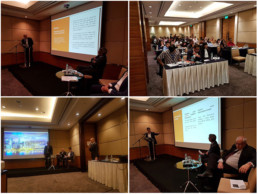
AKSET Law and TKQP (Tan Kok Quan Partnership) successfully hosted a joint seminar, titled: An Arbitration Day – Foreign Arbitration Awards
At this event, AKSET Law Partner Johannes C. Sahetapy-Engel spoke about the Enforcement of Foreign Arbitral Awards – Indonesia Perspective. The topic dealt specifically with the challenges successful parties may face in attempting to get an arbitral award recognized and enforced by the Central Jakarta District Court in Indonesia under the Indonesian Arbitration Law.
TKQP Partner Karam Singh Parmar was a featured speaker on Enforcement of Arbitral Awards – Difficulties Encountered. The talk covered some of the problems or difficulties successful parties have faced in trying to enforce arbitral awards in various jurisdictions and will suggest steps that can be taken to address the same.
TKQP Senior Associate Imran Rahim was also a featured speaker on Speedier Arbitration Proceedings – SIAC Developments. The talk covered the developments in international arbitration (with particular regard to arbitrations under the auspices of the SIAC) that have led to much quicker resolution of disputes referred to arbitration.
The event took place at Grand Hyatt Hotel Jakarta on April 4, 2018.


AKSET Partners, Arfidea D. Saraswati and Inka Kirana, and Senior Associate, Prihandana Suko P. Adi, attended LAW 2018 Asia Pacific Regional Meeting
AKSET Partners, Arfidea D. Saraswati and Inka Kirana, and Senior Associate, Prihandana Suko P. Adi, attended LAW 2018 Asia Pacific Regional Meeting. AKSET Partner, Arfidea D. Saraswati spoke on a session: How to Create a Successful Lawyer Exchange”. The three-days event was held at the Langham Hotel, Hong Kong.

Ultimate Beneficial Owners
On March 1, 2018 the President signed Presidential Regulation No. 13 of 2018 on the Implementation of Know-Your-Beneficial-Owner Principle by Corporations for the Prevention and Eradication of the Criminal Acts of Money Laundering and Terrorism Funding (the “Presidential Regulation”). The Presidential Regulation became effective as of March 5, 2018.
♦ Definitions
The Presidential Regulation defines a “Beneficial Owner” as an individual who (i) may appoint or dismiss any of a corporation’s board of directors, board of commissioners, administrators, or supervisors of such corporation, (ii) possesses the authority to take control of such corporation, (iii) is entitled to receive, and/or does actually receives, benefits from such corporation, directly or indirectly, (iv) is the true owner of such corporation’s funds or shares, and/or (v) meets certain criteria of a beneficial owner under the Presidential Regulation.
A “Corporation” is defined as an organized association of individuals and/or assets both legal entities and non-legal entities. A Corporation includes: (i) a limited liability company, (ii) a foundation, (iii) an association (perkumpulan), (iv) a cooperative, (v) a limited partnership, (vi) a partnership, and (vii) any other form of corporation.
♦ Determination of Corporation’s Beneficial Owner
Under the Presidential Regulation, a Corporation must determine at least 1 (one) Beneficial Owner in accordance with a set of criteria provided. The provided criteria for limited liability companies, foundations, and associations are as follows:


Furthermore, any central or regional government institutions having the authority to register, validate, dissolve, or supervise Corporations (the “Authorized Institutions”) may determine other Beneficial Owners in addition to the ones determined by the relevant Corporations.
♦ Implementation of the Know-Your-Beneficial-Owner Principle
The Presidential Regulation requires Corporations to appoint a person in charge who will be responsible for implementing the principle and for providing information in relation to the relevant Corporation and the Beneficial Owner(s) upon the request of any Authorized Institutions and/or law-enforcement agencies.
The implementation of the principle is done through identification and verification stages. The implementation must be done at the time of application for establishment, registration, validation, approval, or business permit of the Corporation, and throughout during the entire period of its operations.
The identification stage is to be carried out through collection of information of the relevant Beneficial Owner(s) (including its supporting documents), which comprise at least the individual’s (i) full name, (ii) identity numbers, as found on a residential card, driving license or passport, (iii) date and place of birth, (iv) nationality, (v) address, as written on the relevant identity card, (vi) address in the relevant country of origin (for foreigners), (vii) taxpayer-identification number, and (viii) relationship with the relevant Corporation.
At the verification stage, Corporations must verify the information collected with the relevant supporting documents.
Corporations are then required to pass on this information to the relevant Authorized Institutions, along with a letter affirming the accuracy of the information which is being submitted. If it is deemed necessary, Authorized Institutions may undertake a further verification of the conformity between the submitted information and the data provided in the supporting documents. Corporations are also required to update any information regarding their beneficial owners on an annual basis.
♦ Sanctions
Corporations not implementing the know-your-beneficial-owner principle may be subject to sanctions in accordance with the provisions of relevant laws and regulations.
♦ Cooperation and exchanges of information
The Presidential Regulation allows Authorized Institutions to cooperate with each other and to exchange information with any domestic or international institution if a Corporation is alleged to have engaged in criminal activity relating to money laundering and/or terrorism funding.
More importantly, information on Beneficial Owners is publicly available from the relevant Authorized Institutions, in accordance with the procedures set out under the relevant Indonesian laws and regulations.
♦ Remarks
Although this Presidential Regulation is aimed for the prevention and eradication of activities relating to money laundering and/or terrorism funding, given the broad coverage of this Presidential Regulation it is conceivable that any Authorized Institution may apply the principles in this Presidential Regulation in other contexts in determining whether or not a person is a Beneficial Owner of a Corporation.
An important aspect of the Presidential Regulation is the notion that the information of a Beneficial Owner is publicly available. Certain information of a person under the Residence Administration Law (Law No. 23 of 2006) is legally protected. Depending on the level of information of a Beneficial Owner that will be available publicly, it is unclear how the provisions of that Law may be overturned by the Presidential Regulation.
March 13, 2018
Copyright © 2018 AKSET. All rights reserved.
AKSET Law Hosted INGO Day
AKSET hosted INGO Day, a mini-seminar on INGO Registration and its Challenges, and Various Employment Issues on INGO.
The event took place at AKSET Law Offices on February 15, 2018.
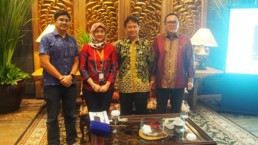
AKSET Partner, Arfidea D. Saraswati moderated Dinner Talk Series on Mining titled “Up, Close and Personal with CEO of PT INALUM as Holding of Mining Industry in Indonesia” held by Energy Nusantara
Arfidea D. Saraswati moderated Dinner Talk Series on Mining titled “Up, Close and Personal with CEO of PT INALUM as Holding of Mining Industry in Indonesia” held by Energy Nusantara. Mr. Budi Gunadi Sadikin shared the background, progress and role of Inalum as holding of mining state owned enterprises, and Inalum’s target to become a 500 Forbes company in the next decade.
The event was attended by senior executives from mining, industry, infrastructure, energy, oil and gas, bank and finance industries, and professional consultants. It took place in Jakarta on January 31, 2018 at Kembang Goela Restaurant.

Insurance Rules & Industry Practice in relation with the new Ministerial Regulation No 82/2017
AKSET Partner, Abadi Abi Tisnadisastra, was a panelist on “Insurance Rules & Industry Practice in relation with the new Ministerial Regulation No 82/2017” at a Conference on Ministerial Regulation on the requirement to use domestic shipping and insurance companies for export and import of specified goods, held by Petromindo and CoalAsia Magazine.
The session took place in Jakarta on January 31, 2018 at the Aryaduta Hotel.
Shipping and Coal Trading Rules & Industry Practice
AKSET Partner, Arfidea D. Saraswati, spoke about “Shipping and Coal Trading Rules & Industry Practice” in a Conference on Ministerial Regulation No. 82/2017 on the requirement to use domestic shipping and insurance companies for export and import of particular commodities, held by Petromindo and CoalAsia Magazine.
The event was attended by senior executives from mining, plantation, shipping, insurance, energy, bank and finance industries, and professional consultants. The session took place in Jakarta on January 31, 2018 at the Aryaduta Hotel.