
Minister of Energy and Mineral Resources Sets Ground Rules on Battery Electric Vehicle Charging Infrastructure
Following the Government’s program to accelerate the adoption of battery based electric vehicle in Indonesia under President Regulation No. 55 of 2019 on the Acceleration of Battery Electric Vehicle (“BEV”) Program for Road Transportation issued last year, the Minister of Energy and Mineral Resources (the “MEMR”) issues the MEMR Regulation No. 13 of 2020 on the Provision of Electric Charging Infrastructure for Battery Electric Vehicle (“MEMR Regulation 13/2020”) in August 7, 2020.
The MEMR Regulation 13/2020 complements the already existing MEMR Regulations which regulates other aspects of BEV charging in Indonesia, such as the MEMR Regulation No. 35 of 2013 as lastly amended by MEMR Regulation No. 12 of 2016 which regulates the relevant permits in electricity supply and electricity supporting services business.
Notably, the MEMR Regulation 13/2020 serves as the ground rule for the provision of BEV charging infrastructure, stipulating the various types of charging infrastructure, the necessary licensing requirements and safety standards, as well as determining the tariff to be imposed for BEV charging.
- Types of Infrastructure
The MEMR Regulation 13/2020 divides BEV charging infrastructure in two types, namely: (i) battery charging facilities (also known as fasilitas pengisian ulang) and (ii) battery exchange facilities (also known as fasilitas penukaran baterai).
Battery charging facilities may take place at (i) Private Electric Installations and/or (ii) Public Electric Vehicle Charging Stations (Stasiun Pengisian Kendaraan Listrik Umum or “SPKLU”), while battery exchange facilities will take place at Public Electric Vehicle Battery Exchange Stations (Stasiun Penukaran Baterai Kendaraan Listrik Umum or “SPBKLU”).
Private Electric Installations are facilities at electricity utilization installations used for BEV charging specifically for captive use which shall not be used for commercial activities. Private Electric Installations may be located at government offices or at residential area.
Meanwhile, SPKLU and SPBKLU are BEV charging facilities and BEV battery exchange facilities used for public interest.
SPKLU and SPBKLUs shall be located at locations that are easily reachable by BEV owners, that would not disturb the security, safety, and order of traffic. Specifically for SPKLUs, the location shall be complimented with a specific designated parking area.
To accelerate the adoption of BEV, the MEMR Regulation 13/2020 also suggests SPKLU and SPBKLUs to be provided in pre-existing facilities, such as at public gas stations, shopping malls, government offices, and public parking spaces, without eliminating other potential locations for as long as the meet the accessibility and safety requirements.
MEMR Regulation 13/2020 provides a more detailed technical requirement for SPKLU(s), which includes standards of its power supply equipment, current/voltage/communication control system, also [protection] and safety system.
Meanwhile, SPBKLU(s) appear to have a less stringent requirement, focusing primarily on the guarantee of the battery being [leased], the online application provided by the operator on the battery swapping facilities and other information, and the ownership of the battery [exchanger].
Every charging and battery exchange infrastructure shall meet the stipulated electricity safety, including utilizing only certified products meeting the Indonesian national safety standards (SNI), employing certified technicians, and obtaining operation-worthiness certification in the form of Operational Feasibility Certificate (Sertifikat Laik Operasi or “SLO”).
- Licensing Requirements and Safety Standards
Depending on whether the SPKLU sources its own electricity or simply purchasing the electricity, the entity developing SPKLU will be required to obtain either an integrated Electric Provision Business License (Izin Usaha Penyediaan Tenaga Listrik Terintegrasi or “Integrated IUPTL”) or a sale IUPTL (Izin Usaha Penyediaan Tenaga Penjualan or “Sale IUPTL”), respectively.
In addition to the IUPTL, all SPKLUs developer shall also obtain determination of Business Area (Wilayah Usaha) from the MEMR and approval of their Electric Provision Business Plan (Rencana Usaha Penyediaan Tenaga Listrik or “RUPTL”). A holder of integrated IUPTL is also required to own several SPKLUs located in more than 1 (one) province nationwide.
Since at the moment, PT PLN Persero (PLN) is the only Integrated IUPTL holder, we refer the Integrated IUPTL holder as PLN in this Newsflash.
Meanwhile, Private Installation and SPBKLU operator are not required to obtain IUPTL (nor the relevant Business Area or RUPTL) to run its business.
Based on MEMR Regulation 13/2020, SPBKLU developer shall have a license in accordance with the prevailing laws and regulations.
Both SPKLU and SPBKLU must obtain SPKLU or SPBKLU Identity Number by submitting an application to the MEMR. Once issued, a SPKLU or SPBKLU shall put its Identity Number in a clearly visible location.
Any change to the SPKLU or SPBKLU’s scheme data or location shall be reported in writing to the MEMR within 5 (five) business days upon the change.
- Business Model
The MEMR Regulation 13/2020 provides possible business models in which SPKLU and SPBKLU may be run. Some business models of SPKLU involve the role of holders of Electricity Supporting Services Business License specifically for Operations (Izin Usaha Jasa Penunjang Tenaga Listrik untuk Pengoperasian or “IUJPTL”) as the operator.
There are 5 (five) possible business models in which SPKLU may be run by the holder of an Integrated IUPTL or PLN:
(i) provide/sell electricity, own, self-operated by IUPTL holder (“POSO”);
(ii) provide/sell electricity and own by IUPTL holder, but operated by the IUJPTL holder (“POPO”);
(iii) provide/sell by IUPTL holder, but owned and operated by IUJPTL holder (“PPOO”);
(iv) provide/sell and self-operated by IUPTL holder, but lease the facilities from partner (“PLSO”);
(v) provide/sell by the IUPTL holder, lease the facilities from a partner, and operated by IUJPTL holder (“PLPO”).
Meanwhile, there are other 5 (give) possible business models in which SPKLU may be run by the holder of a Sales IUJPTL:
(i) by buying electricity from IUPTL holder, sell and self-operate (also known as retail, own, self-operated or “ROSO”);
(ii) by buying electricity from Integrated IUPTL holder, sell yet privately operated by IUJPTL holder (also known as retail, own, privately-operated or “ROPO”);
(iii) by buying electricity from Integrated IUPTL holder, sell, yet owned and operated by IUJPTL holder (also known as retail, privately owned and operated or “RPOO”);
(iv) by buying electricity from Integrated IUPTL holder, sell, lease from partner yet still self operate (also known as retail, lease, self-operated or “RLSO”); and/or
(v) by buying electricity from Integrated IUPTL holder, sell, yet lease from partner and operated by IUJPTL holder (also known as retail, lease, privately operated or “RLPO”).
SPBKLUs business models are classified based on whether the SPBKLU developer owns the battery swapping cabinet. There are two possible business models in which SPBKLU may be run:
(i) battery provider, battery swapping cabinet owner (“BPCO”), and
(ii) battery provider, battery swapping cabinet lessee (“BPCL”).
- Appointment of PLN and Tariff
Same as the approach implemented under President Regulation No. 55 of 2019, as a pioneer project, the MEMR Regulation 13/2020 appoints PT PLN (Persero) (“PLN”) to implement the provision of charging infrastructure. However, PLN may also collaborate with other entities.
PLN shall also create a roadmap of SPKLU and SPBKLU installations (by coordinating with the SPKLU and SPBKLU developers) to be submitted to the MEMR within 6 (six) months from the issuance of the MEMR Regulation 13/2020 (i.e., January 2021), including the location, capacity, and the chosen business model for each SPKLU and SPBKLU.
The imposed tariff for electricity provided by PLN varies between:
(i) retail tariff imposed by Integrated IUPTL holder for Private Electric Installation for public transportation charging, SPKLU, or SPBKLU;
(ii) retail tariff imposed by Integrated IUPLT holder for Private Electric Installation for non-public transportation use; and
(iii) tariff imposed for special services being tariff for charging imposed by SPKLU developers to BEV owners.
Despite so, MEMR Regulation 13/2020 provides an additional criteria for determining electricity retail tariff being a Q factor at a minimum amount of 0.8 (point zero eight) and a maximum amount of 2 (two).
Whereas, SPKLU developer as Integrated IUPTL or Sales IUPTL holder shall use an N factor at the highest amount of 1.5 (one point five) in determining tariff to BEV owners.
On the other hand, tariff of battery exchange/battery swapping imposed by SPBKLU developer shall be based on the commercial considerations of such developer and agreement between the SPBKLU developer and the BEV owner.
- Guidance, Monitoring, and Sanctions
The MEMR will continuously provide guidance on the provision of charging infrastructure and regulation of electric power tariff for BEVs, including through socialization, dialogue, and/or focus group discussions; technical education and training; assistance in troubleshooting; and monitoring and evaluation of the provision of charging infrastructure.
The MEMR will also monitor the criteria and facilities installed , the implementation of tariff, the quality of operational services provided, and the safety standard of each charging infrastructure.
Failure to obtain and display valid SPKLU or SPBKLU Identity Number visibly and failure to report any change of data scheme or location of SPKLU or SPBKLU may result in administrative sanction. The MEMR may issue up to three written warning to such SPKLU or SPBKLU.
Failure to observe with the written warnings may result in temporary suspension of business activities for 3 (three) months. Subsequently, the MEMR may revoke the relevant business licenses of the SPKLU and SPBKLU operators if they fail to comply with the stipulated provision after the temporary suspension.
The MEMR will also impose sanction pursuant to the prevailing laws and regulations on electric power for failure to meet the stipulated safety standards.
Owners of Private Installations, SPKLU and SPBKLU that have operated before the enactment of MEMR Regulation 12/2020 shall comply and adjust its operations in accordance with the regulation. Specifically, for existing SPKLU(s) developer, adjustment shall be made at the latest 6 (six) months as of the enactment of the regulation.
***
September 8, 2020
Copyright © 2020 AKSET. All rights reserved.

PERADI International Seminar - Indonesia's Investment Potential
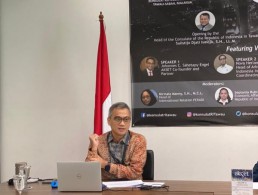
On September 3, 2020, AKSET Partners, Johannes Sahetapy-Engel and Alfa Setiawati spoke at the International Seminar discussing "Indonesia's Investment Potential." The seminar was organized by the Consulate of Indonesia at Tawau and Peradi.
Other speakers at the Seminar are from BKPM, IIPC, and Peradi Banjarbaru.
We would like to thank the Consulate of Indonesia at Tawau and Peradi for holding a special event involving our friends from Malaysia and Singapore.


Amendment of the Income Tax Incentives Implementation for Investors in Certain Industries and/or Regions
On July 27, 2020, the Minister of Finance (the “Minister”) amended the implementing regulation of Government Regulation No. 78 of 2019 (“GR 78”), namely, the Minister Regulation No. 96/PMK.01/2020 of 2020 dated July 27, 2020 on the Amendment of the Minister Regulation No. 11/PMK.010/2020 on the Implementation of Government Regulation No. 78 of 2019 on the Income Tax Incentives for Investments in Certain Industries and/or Regions (“Minister Reg. 96”).
As a brief background, the Minister Regulation No. 11/PMK.010/2020 (“Minister Reg. 11”) as the main implementing regulation of GR 78 regulates matters related with the provisions of income tax incentives for investors in certain industries and/or regions, which includes (i) the requirements for tax incentives over tangible fixed assets, (ii) the application procedures to obtain tax incentives, and (iii) the requirements to utilize the tax incentives. Further elaboration on the income tax incentives referred to herein may be read on our Newsflash on GR 78.
In summary, Minister Reg. 96 amends the authorizations of the government officials on the procedures of the income tax incentives provisions. The differences between Minister Reg. 11 and Minister Reg. 96 will be elaborated below.
| Minister Reg. 11 | Minister Reg. 96 | Remarks |
| Amendment of Article 5 | ||
| The determination of the value of intangible fixed assets as the basis of income tax incentive calculation shall be made by the Director of General Taxation (the “Director”). | The determination shall be made by the Minister. | |
| Amendment of Article 6(6) | ||
| The OSS System will notify the Minister through the Director when the application of income tax incentive is completed. | The OSS System will notify the Minister directly when the application of income tax incentive is completed. | Article 6 stipulates provisions on the application procedures for an investor to be granted with the income tax incentive.
Based on such article, the OSS System will automatically determine whether or not an investor is eligible to be granted with the income tax incentive, based on the criteria set out under GR 78. The OSS System will then send a notification to the relevant investor if they are eligible, and such investor will be required to submit certain copies of documents through the OSS System. If the OSS System declares that the application is completed and acceptable, the OSS System will send a notification to the Minister of Finance as a suggestion of the granting of the income tax incentive. |
| Amendment of Article 7(2) | ||
| In the event the OSS System is not available, the application shall be submitted offline to the Director through the Head of the Capital Investment Coordinating Body (Badan Koordinasi Penanaman Modal or “BKPM”). | In the event the OSS System is not available, such application shall be submitted offline to the Minister through the Head of BKPM. | |
| Addition of Article 8A | ||
| The granting of the income tax incentive shall be made by the Head of BKPM, for and on behalf of the Minister.
The Head of BKPM will issue a granting decision by no later than 5 (five) days after all requirements have been met. The decision consists of information of the relevant investor, as follows: a. the name, taxation identification number, and address; b. the details of the type of income tax incentive; c. the business registration numbers, the principal license, the investment license, the capital investment registration, or the business license, and the business or project location submitted for the incentive; d. the starting period of the income tax incentive; e. obligations of the relevant taxpayer (or investor); f. prohibitions of the taxpayer; and g. the business field, the Indonesia Standard Industrial Classification (KBLI), the scope of product, and the value of the capital investment plan. The implementation of the income tax incentive granting by the Head of BKPM must be reported to the Minister quarterly. |
Based on Article 8 of Minister Reg. 11, the granting of the income tax incentive is determined by the Minister and issued by the Director instead of the Head of BKPM.
The Minister Reg. 11 also did not stipulate the information contained in the issued decision. |
|
Minister Reg. 96 is effective 15 (fifteen) days since the date of promulgation, which is as of August 11, 2020.
***
August 27, 2020
Copyright © 2020 AKSET. All rights reserved.
Asia Business Law Journal 2020
AKSET Partners: Johannes C. Sahetapy-Engel and Abadi Abi Tisnadisastra were listed as Indonesia’s top 100 lawyers in 2020 by Asia Business Law Journal
Updates on Tax Incentives for Businesses Affected by COVID-19
Not long after the Minister of Finance Regulation No. 23/PMK.03/2020 dated March 23, 2020 on Tax Incentives for Taxpayers Affected by the Coronavirus Outbreak (“MOF Regulation 23”) was issued, the Minister of Finance (the “MOF”) issued the MOF Regulation No. 44/PMK.03/2020 dated April 27, 2020 on Tax Incentives for Taxpayers Affected by the Coronavirus Disease 2019 Pandemic (“MOF Regulation 44”). MOF Regulation 44 revokes and replaces MOF Regulation 23.
MOF Regulation 44 was later revoked and replaced by MOF Regulation No. 86/PMK. 03/2020 dated July 16, 2020 on Tax Incentives for Taxpayers Affected by the Coronavirus Outbreak (“MOF Regulation 86”). The Director General of Tax (the “DGT”) also issued the DGT Circular Letter No. SE-43/PJ/2020 dated July 28, 2020 on the Implementing Guidelines of MOF Regulation 86 (“DGT Circular 43”).
MOF Regulation 86 sets out the same tax incentives as MOF Regulation 44, as follows:
- the Article 21 income tax incentives, whereby the Government will bear the Article 21 Income Tax for employees with the annual gross income of up to Rp200 million;
- the final income tax incentive under Government Regulation No. 23 of 2018 dated June 8, 2018 on the Income Taxes on Income from Businesses Received or Generated by Taxpayers with Certain Gross Revenues, whereby the Government will bear the 0.5% final income tax for certain taxpayers that receive or generate an annual gross revenue below Rp4.8 billion;
- the non-collection of Article 22 import tax;
- the 30% reduction of the Article 25 corporate income tax (“Article 25 CIT”) installment incentives; and
- the accelerated Value Added Tax (“VAT”) refunds.
As a reminder, for the Article 25 CIT installment incentives, the DGT Circular 43 sets out that the 30% reduction of the Article 25 CIT installment is calculated from, among others, the Article 25 CIT installment under the 2019 Annual Income Tax Returns, or the decision on the reduction of Article 25 CIT installment due to reduction in business applied by the taxpayer. Thus, a taxpayer that already obtains a reduction of Article 25 CIT installment may also apply for the incentives under MOF Regulation 86.
We set out below the key updates on tax incentives under MOF Regulation 86 and DGT Circular 43.
- Extension of Tax Incentive Period
Previously, MOF Regulation 23 and MOF Regulation 44 set out the tax incentive period until September 2020. Now, under MOF Regulation 86, the tax incentives are applicable until December 2020.
- Additions of Taxpayers Eligible for Income Tax Incentives
To be eligible for the income tax incentives, an employee shall be employed by an employer in certain business lines listed in Annex A of MOF Regulation 86. MOF Regulation 86 adds 127 business lines in its Annex A (in comparison to MOF Regulation 44).
In total, there are 1,189 business lines listed in Annex A of MOF Regulation 86. This list has been progressively expanded from the initial 440 business lines under MOF Regulation 23 that were only limited to manufacturing businesses. MOF Regulation 44 and MOF Regulation 86 broaden the scope of the eligible business lines, including services, tourism, and trade.
The employer shall already have the eligible business line listed in:
- its 2018 Annual Tax Returns; or
- in its tax administration master-file, if it did not already have the obligation to file for Annual Tax Returns by 2018. Previously, under MOF Regulation 44, this requirement was only applicable for taxpayers registered after 2018 or for government institutions. This new provision allows taxpayers existing before 2018 to also apply for the tax incentives.
- Additional Provisions for Accelerated VAT Refunds
Low risk taxable enterprises are qualified for accelerated VAT refunds. MOF Regulation 86 adds another requirement for this tax incentive, whereby the taxpayer shall opt for the accelerated refund of tax overpayment under Article 9(4c) of the Tax Law when submitting their periodic VAT returns.
MOF Regulation 86 and DGT Circular 43 also provide that the accelerated VAT refunds will still be granted to the relevant taxpayers even though there are compensations of VAT overpayments for the previous tax period.
- Deadlines for Submissions
As MOF Regulation 86 entered into force on July 16, 2020, DGT Circular 43 sets out the following deadlines for application submissions:
- notice for Article 21 income tax incentive for the period of July 2020 shall be submitted by August 10, 2020; and
- notice for Article 25 income tax incentive for the period of July 2020 shall be submitted by August 15, 2020.
We understand that the Government is in the final process of issuing an adjustment to MOF Regulation 86 for more incentives. The revised regulation is reported to be issued in the near future.
***
August 13, 2020
Copyright © 2020 AKSET. All rights reserved.
Tax Incentives for Gross-Split Production Sharing Contracts in Oil and Gas Sector
On June 16, 2020, the Minister of Finance (the “MOF”) issued Regulation No. 67/PMK.03/2020 of 2020 on Provision of the Incentives of Value-Added Tax or Value-Added Tax and Luxury-Goods Sales Tax, and Land and Building Tax on Upstream Oil and Gas Business Activity through Gross-Split Production Sharing Contracts (“Regulation 67/2020”). Regulation 67/2020 is an implementing regulation of Article 25 of Government Regulation No. 53 of 2017 dated December 28, 2017 on Tax Treatment for Upstream Oil and Gas Business Activity through Gross-Split Production Sharing Contracts (“GR 53/2017”).
- Tax Incentives
Regulation 67/2020 provides a comprehensive regulatory framework for the tax incentives referred to in GR 53/2017 with the aim of enticing investors to invest in the upstream oil and gas activity. The tax incentives consist of the following:
a. Exemptions from collecting value-added tax (Pajak Pertambahan Nilai or “PPN”) or PPN and luxury-goods sales tax (Pajak Penjualan Atas Barang Mewah or “PPnBM”) in relation to certain activities and objects which are used during oil operation activities, as follows: (i) procurement of taxable goods and/or taxable services; (ii) utilization of intangible taxable goods from outside the customs areas within the customs areas; and/or (iii) utilization of taxable services from outside the customs areas within the customs areas; and
b. Reduction of land and building tax (Pajak Bumi dan Bangunan or “PBB”) amounting to 100% of payable PPB, as set out under the relevant tax returns.
As an overview, Gross-Split Production Sharing Contracts (each, a “Gross-Split PSC”) were introduced under the Minister of Energy and Mineral Resources (the “MEMR”) Regulation No. 8 of 2017 dated January 16, 2017 on Gross-Split Production Sharing Contracts, as lastly amended by MEMR Regulation No. 20 of 2019 dated August 29, 2017 (“Regulation 8/2017”). A Gross-Split PSC is defined as a production sharing contract in the upstream oil and gas business activities based on the principle of distributing gross production without the mechanism of operating costs recovery.
- Applicability
The above tax incentives are only applicable to contractors that meet the following criteria (collectively, the “Contractors”):
a. Contractors that operate under cooperation contracts signed prior to the enactment of GR 53/2017 and which contracts were subsequently amended to adjust to GR 53/2017;
b. Contractors that operate under the Gross-Split PSCs signed before GR 53/2017, provided that the Gross-Split PSCs are consistent with GR 53/2017; or
c. Contractors that operate under the Gross-Split PSCs signed after GR 53/2017 which consistent with GR 53/2017.
Regulation 67/2020 enters into force as of July 16, 2020.
***
July 20, 2020
Copyright © 2020 AKSET. All rights reserved.
Income Tax Reduction for Eligible Public Companies Re-Regulated
On June 19, 2020, the Government issued Government Regulation No. 30 of 2020 dated June 19, 2020 on the Reduction of Income Tax Fee for Domestic Corporate Taxpayers in the Form of Public Companies (“GR 30/2020”). GR 30/2020 is an implementing regulation of Article 5(3) of Law No. 2 of 2020 dated May 18, 2020 on the Implementation of Government Regulation in Lieu of Law No. 1 of 2020 dated March 31, 2020 (“Perppu 1/2020”) which was enacted to improve the social, economic, and community welfare due to the Covid-19 pandemic.
GR 30/2020 is meant to strengthen the capital market sector which holds an important role in the development of investment, business capitalization structure, and acceleration of national economic growth—which shall be realized through the increase of registered public companies. GR 30/2020 revokes Government Regulation No. 77 of 2013 dated November 21, 2013, as lastly amended by Government Regulation No. 56 of 2015 dated August 4, 2015 (“GR 77/2013”) which previously regulated the same matter.
Under GR 30/2020 is the deduction of Income Tax fee for corporate taxpayers and permanent establishments from 28% to (i) 22% for the Tax Years of 2020 and 2021 and (ii) 20% starting from 2022 Tax Year (before the Income Tax reduction incentive for eligible public companies). Further, under GR 30/200 an eligible public company is entitled to an additional 3% reduction of the income tax rates (the “3% Reduction”).
- Criteria of Eligible Public Companies
The criteria that must be satisfied by a public company to enjoy the 3% Reduction under GR 30/2020 are: (i) a public company, (ii) 40% of the total issued and paid-up shares must be traded on the stock exchange in Indonesia, and (iii) fulfill certain requirements, as follows:
- The shares referred to on point (ii) above must be owned by at least 300 persons;
- Each person referred to on point (a) above may only hold less than 5% of the total issued and paid-up shares; and
- The requirements referred to in points (a) and (b) above must be fulfilled for at least 183 calendar days in one tax year period.
Please note that points (a) and (b) above exclude any shares bought back by the public company and/or a related party of the public company.
- Transitional Provisions
The application for eligible public company to be granted the 3% Reduction, may be submitted to the Director General of Taxation.
***
July 10, 2020
Copyright © 2020 AKSET. All rights reserved.

VAT Over Use of Imported Digital Products and Services-Further Regulation
The awaited the Director General of Taxation (“DGT”) regulation on the value added tax (“VAT”) on imported digital products and services was issued on June 25, 2020. This is the DGT Regulation No. PER-12/PJ/2020 of 2020 dated June 25, 2020 on Certain Defined Criteria of Collectors and Appointment of Collectors, Collection, Payment, and Reporting of Value Added Tax (“VAT”) on the Utilization of Taxable Non-Tangible Products and/or Services from Outside the Custom Area through Electronic System Trading within the Custom Area (the “Regulation”).
The Regulation is contemplated in the Minister of Finance (the “Minister”) Regulation No. 48/PMK.03/2020 of 2020 dated May 5, 2020 on the Procedures to Appoint Collectors, Collection as well as Reporting of VAT on the same products and/or services (the “Minister Regulation”). Please refer to our Newsflash on the Minister Regulation.
The Minister Regulation sets out the general provisions on the imposition of VAT over use of digital products and services from outside Indonesia. The Regulation is the guideline for the VAT imposition that is effective as of July 1, 2020.
We set out below the following salient provisions of the Regulation: (i) criteria of VAT collectors, (ii) procedures of VAT collection, (iii) procedures of VAT payment, and (iv) procedures of VAT reporting.
- Criteria of VAT Collectors
In order to collect the VAT, an Electronic System Trading (Perdagangan Melalui Sistem Elektronik – the “PMSE”) Business Actor must first be appointed by the DGT through the issuance of a DGT Decree (a “PMSE VAT Collector”). The PMSE VAT Collector shall collect the VAT from the consumers starting from the following month after the issuance date of the DGT Decree.
Each PMSE VAT Collector will be given a PMSE VAT Collector Identification for administrative purposes. They will also be obligated to activate an account and verify their data through an application that will be provided by the DGT.
The criteria for a PMSE Business Actor to be appointed as the PMSE VAT Collector are as follows:
- It has a transaction value with Indonesian consumers (i.e., the product purchasers and/or service recipients) in excess of Rp600,000,000 (six hundred million Rupiah) in 1 (one) year or in excess of Rp50,000,000 (fifty million Rupiah) in 1 (one) month; and/or
- the volume of the traffic or the number of parties in Indonesia that access the services exceeds 12,000 (twelve thousand) in 1 (one) year or 1,000 (one thousand) in 1 (one) month.
In our view, the thresholds look fairly low and many PMSE Business Actors would likely meet these criteria.
A PMSE Business Actor may request the status as a PMSE VAT Collector from the DGT by submitting a notification to the DGT.
Further, if a PMSE VAT Collector no longer satisfies the abovementioned criteria, then the appointment will be cancelled by the DGT through a DGT Decree.
- Procedures of VAT Collection
The VAT that must be collected by a PMSE VAT Collector is at 10% of the tax basis and must be collected during the payment made by the consumers. In order to accommodate all types of transaction, the Regulation sets out 3 (three) different flows of VAT collection, as follows:
- When the transaction is carried out directly by the seller who is also a PMSE VAT Collector to the consumers, the payable VAT over the use of intangible taxable goods and/or services must be collected, paid, and reported by the seller;
- When the transaction is carried out by the seller to the consumer, through a PMSE Operator, the payable VAT over the use of intangible taxable goods and/or services must be collected, paid, and reported by either the seller or the PMSE Operator who (i) is appointed as the PMSE VAT Collector and (ii) issued the commercial invoice, billing, order receipt, or any other similar documentation; and
- In the case that the use of intangible taxable goods and/or services within the custom area through a PMSE from outside of the custom area is not being collected with VAT as referred to in points (a) and (b) above, then the payable VAT over the use of intangible taxable goods and/or services must be collected, paid, and reported personally by the consumers by no later than the 15th of the following month after the VAT becomes payable. In this case, the VAT becomes payable (i) when the intangible taxable goods and/or services is used by the consumers, (ii) when the cost of such intangible taxable goods and/or services is deemed payable by the consumers, (iii) when the selling price of such intangible goods and/or replacement of such taxable services is collected by the party who provides it, or (iv) when the cost of such intangible taxable goods and/or services is paid partly or entirely by the consumer, whichever occurs first.
On the other hand, if the VAT is collected both by the PMSE VAT Collector as referred to in points (a) and (b) and by the consumers as referred to in point (c) above, then in accordance with Article 3A of the Indonesian VAT Law, the VAT that is personally paid by the consumers may be (i) transferred to pay for certain other tax payment, (ii) refunded as an overpaid payment, (iii) credited to the output tax, or (iv) deducted from the gross income—all of such are subject to the relevant laws and regulations on taxation.
Over the collected VAT, the PMSE VAT Collector must issue a proof of VAT collection in the forms of commercial invoices, billings, order receipts, or any other similar documentation, which state that the VAT collection is done and paid. In order to be treated the same as a tax invoice, such proof of VAT collection must consist of the name and the Tax Registration Numbers (NPWP) of the consumers or the email addresses of the consumers registered under the DGT administration.
- Procedures of VAT Payment and Reporting
A PMSE VAT Collector must pay the collected VAT for each tax period by no later than the end of the following month after the end of a tax period. The VAT payment shall be conducted electronically by using the DGT billing code, which is obtained by the PMSE VAT Collector through the DGT billing application.
The PMSE VAT Collector may choose his/her preferred money currency on the DGT application and if the PMSE VAT Collector chose to pay the VAT in US Dollar, then the payment shall be made to the state’s treasury through a perception bank of foreign currency or other perception institution.
Further, the PMSE VAT Collector must report the collected and paid VAT quarterly by no later than the end of the following month after the end of a quarterly period, as follows:
- Q1: Tax period of January until March;
- Q2: Tax period of April until June;
- Q3: Tax period of July until September; and
- Q4: Tax period of October until December.
***
July 9, 2020
Copyright © 2020 AKSET. All rights reserved.
DKI Jakarta PSBB Transition Period Extended; Workplaces Guidance
On July 2, 2020, with the issuance of Governor of DKI Jakarta Decree No. 647 of 2020 on Extension of Enforcement, Phase, and Implementation of Large-Scale Social Restrictions Activities at Transition Period Towards Healthy, Safe, and Productive Community (the “Decree”) the Governor of DKI Jakarta officially extended the implementation of its transitional phase of the Large-Scale Social Restrictions (Pembatasan Sosial Berskala Besar – “PSBB”) for 14 (fourteen) days effective as of July 3 until July 16.
The transitional phase which was initially introduced by the Governor of DKI Jakarta last month was intended to ease the implementation of the PSBB, in order to maintain the productive socio-economic activities (such period, the “Transition Period”).
Under the Decree, the implementation of the Transition Period shall refer to Governor of DKI Jakarta Regulation No. 51 of 2020 dated June 4, 2020 on the Implementation of Large-Scale Social Restrictions during Transition Period Towards Healthy, Safe, and Productive Community (the “Regulation”).
In principle, during the Transition Period the implementation of the PSBB in DKI Jakarta will be relaxed to a certain extent, including reopening of the workplaces of various businesses sectors.
- Workplaces Guidance
Pursuant to the Decree and the Regulation, the Transition Period is an attempt to slowly lift the restriction under the implementation of the PSBB until a ‘new normal’ is reached.
The guidance for workplaces is also set out the Head Manpower Office of DKI Jakarta Decree No. 1363 of 2020 as lastly amended by Decree No. 1477 of 2020 on the Protocols for the Prevention and Mitigation of Covid-19 in Office Workplaces during the Transition Period Towards Healthy, Safe, and Productive Community (the “Protocols”).
We set out below the summary of the guidance under the Regulation and the Protocols that clearly sets out the obligation for workplaces or businesses:
- Implement Clean and Healthy Behavior (Perilaku Hidup Bersih dan Sehat);
This is a set of behaviors that are practiced on the basis of awareness to prevent self-exposure and the environment from the Covid-19 outbreak. Based on the Regulation, the Clean and Healthy Behavior comprises the following behaviors:
-
- limit the activities outside house only for activities that are important and urgent;
- maintain personal health condition and do not conduct activities outside house when feeling unwell;
- limit the activities outside house for those who have a high risk when exposed to Covid-19;
- perform physical distancing within a range of at least 1 meter;
- limit yourself not to be in a crowd;
- avoid sharing personal tools/objects;
- wash hands with clean water and soap before and/or the activities;
- perform regular exercise; and
- consume healthy and nutritiously balanced foods.
- Implement the following measures in conducting the activities at workplaces:
- establish an internal Covid-19 task force at workplaces which consists of the management, HRD department, Occupational Health and Safety (OHS) department, and health officers;
- limit the number of people who are at workplaces at any time to be not more than 50% (fifty percent) of the total number of the people at workplaces;
- conduct the arrangement of working days, working hours, working shifts and working system to adapt the conditions of the Covid-19 outbreak taking into account the health protocols (with the minimum of 3 (three)-hour spacing between one work shift to another);
- conduct the arrangement for the use of employees’ facilities at workplaces to prevent a crowd (religious facilities, canteens, rest areas, sport facilities, entertainment facilities, etc.);
- require employees and guests/visitors to, at all times, wear masks and other personal protective equipment as needed while at workplaces;
- ensure that all parts of workplaces areas are clean and hygienic by conducting periodic cleaning using cleansers and disinfectants, particularly, door handles and stairs, elevator buttons, shared office equipment, other public facilities and areas;
- implement the body temperature examination before a person enters workplaces;
- provide sanitary hygiene tools such as hand sanitizers in each entrance area and around workplaces;
- provide hand washing facilities with running water and soap;
- an employer is prohibited from terminating the employment of an employee who is in the self-quarantine period for health reason and the employer shall continue to provide the rights of such employee;
- ensure that when employees are at workplaces they are not infected by the Covid-19 by conducting a Covid-19 Risk-Self Assessment on the employees 1 (one) day before they work at workplaces as well as require guests/visitors to fill in certain Self-Assessment Forms;
- maintain a physical distancing in all working activities, arrange a distance between employees of not less than 1 (one) meter in all working activities;
- maximize the use of technology to minimize any direct contact between employees;
- reduce the use of meeting rooms by maximizing virtual meetings, despite being in the vicinity;
- health officers/OHS Department officers/HRD officers shall proactively conduct supervision on an employee’s health;
- avoid jointly using personal tools such as personal praying effects, cutlery, etc.;
- encourage every employee to use private vehicles in commuting, preferably bicycles or on foot;
- provide supporting facilities for employees who cycle to workplaces (parking space, shower facilities, etc.);
- clean office operational vehicles and equipping them with personal protective equipment and sanitary hygiene tools as needed;
- carry out prevention measure of transmission such as installing glass screens or dividers for employees who serve guests/customers, etc.;
- provide a separate area/room for the observation of employees, guests/visitors who are found to have symptoms during screening;
- an employer shall provide a work order, an ID card, and an office uniform to employees who are assigned to work;
- employers shall pay attention to the latest information, as well as any guidance or instructions of the relevant Central and Regional-Level Governments, and also inform all employees through the most effective facilities, infrastructure, and media;
- employers shall also provide guidance for workers who do not implement the protocol for the prevention and mitigation of Covid-19; and
- create and announce an integrity pact (pakta integritas) and Covid-19 prevention protocols and put it in the place that are easily accessible.
- Reporting Obligation
Under the Protocols, an employer is required to report the implementation of the above guidance during the Transition Period through . The reporting obligation is in the form of a list of questionnaires on the implementation of the guidance by the employer. Through the link above, the employer shall also be required to upload the integrity pact which was already signed. The employer may also see the integrity pact template through such link.
- Sanctions
Under the Regulation, any violation of the implementation of the Transition Period on the workplace guidance above may be subject to a written warning or a monetary fine in the amount of up to Rp25,000,000 (twenty million Rupiah).
***
July 8, 2020
Copyright © 2020 AKSET. All rights reserved.
AKSET Webinar: "Evolution in Mining Law - Are We There Yet?"
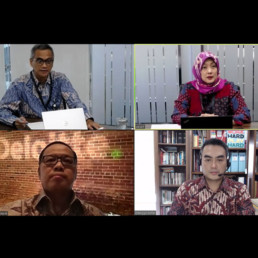
On July 7, 2020, we were pleased to share an interactive webinar session with friends and clients on “Evolution in Mining Law – Are We There Yet?"
AKSET’s Co-Founder, Johannes Sahetapy-Engel gave the welcoming remarks, while AKSET’s Partner Arfidea Saraswati spoke together with Deloitte's Tax Partner, Ali Mardi.
We thank Erlangga Gaffar, Vice President of ICCA, for moderating the webinar.
We look forward to having the company of more friends and clients in our upcoming webinar soon.
